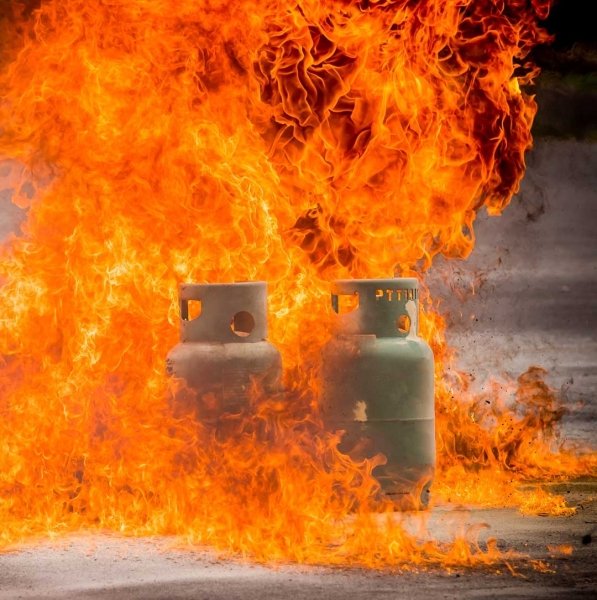
Muscat: As Oman experiences extreme summer heat with temperatures nearing 50°C, residents and business owners are advised to exercise greater caution when handling liquefied petroleum gas (LPG) cylinders.
Meanwhile, negligence and improper storage can lead to devastating fires and explosions.
It can be noted that such alerts are needed amid a number of gas-related incidents recorded in Oman in recent years, which highlight the potentially serious consequences of leaks, faulty equipment and unsafe practices.
Earlier this month, two people suffered serious burn injuries following a gas cylinder explosion at a restaurant in Al Amerat. Emergency response teams from the Civil Defence and Ambulance Authority (CDAA) swiftly brought the resulting fire under control and transferred the injured to hospital for treatment.
In another tragic incident in May last year, an expatriate couple lost their lives after a suspected gas leak triggered an explosion at a restaurant in the Wilayat of Bausher, causing part of the building to collapse.
One of the most significant gas-related incidents in recent years occurred in South al Mabela in August 2023, when a cooking gas explosion at a building housing a restaurant injured 18 people and caused extensive damage to nearby homes and vehicles. The blast underscored the destructive force that can result from gas leaks in densely populated areas.
These incidents come against a backdrop of rising fire statistics nationwide. According to data from the National Centre for Statistics and Information (NCSI), Oman recorded 4,955 fire incidents in 2024, compared to 4,622 in 2023 and 4,186 in 2022. Residential properties accounted for the largest share, with 1,530 house fires reported last year.
Safety experts note that while gas cylinders are manufactured to stringent safety standards, the risk of accidents increases when cylinders are exposed to direct sunlight, stored in poorly ventilated spaces or connected to damaged hoses and regulators.
Authorities advise residents to keep gas cylinders upright at all times and place them in shaded, well-ventilated areas away from heat sources and electrical equipment. Regular inspection of hoses, regulators and connections is also essential, particularly during the summer when extreme temperatures can accelerate wear and tear.
Officials further recommend checking for leaks using soapy water rather than open flames. If bubbles appear around connections, the gas supply should be shut off immediately and a qualified technician contacted.
In the event of a gas leak, residents are urged to turn off the cylinder valve, open doors and windows to allow ventilation and avoid operating electrical switches, matches or lighters, as even a small spark can ignite accumulated gas.
The CDAA repeatedly stressed that public awareness remains one of the most effective tools in preventing gas-related accidents. It says many incidents can be avoided through routine maintenance, adherence to safety instructions and prompt reporting of suspected leaks.
As Oman enters the hottest period of the year, officials are calling on households, restaurants and commercial establishments alike to review their safety measures and ensure gas installations comply with approved standards to protect lives and property.