Havana/The National Assembly of People’s Power published this Monday the draft Law on the Organization of the Central State Administration which reduces the government structure from 27 to 20 ministries, and proposes the merger of the Economy and Planning portfolio with that of Finance and Prices.
From this union the new Ministry of Economy, Finance and Planning will emerge, which will be in charge of planning the economy, economic and social development, financial, budgetary, tax, accounting, treasury, assets, prices, public credit and insurance.
The text of the new law indicates in one of its sections that “it is necessary, (…), to reorganize, resize and perfect the organization of the Central Administration of the State, with the purpose of achieving greater efficiency in the administrative function.”
The text of the new law indicates in one of its sections that “it is necessary, (…), to reorganize, resize and perfect the organization of the Central Administration of the State”
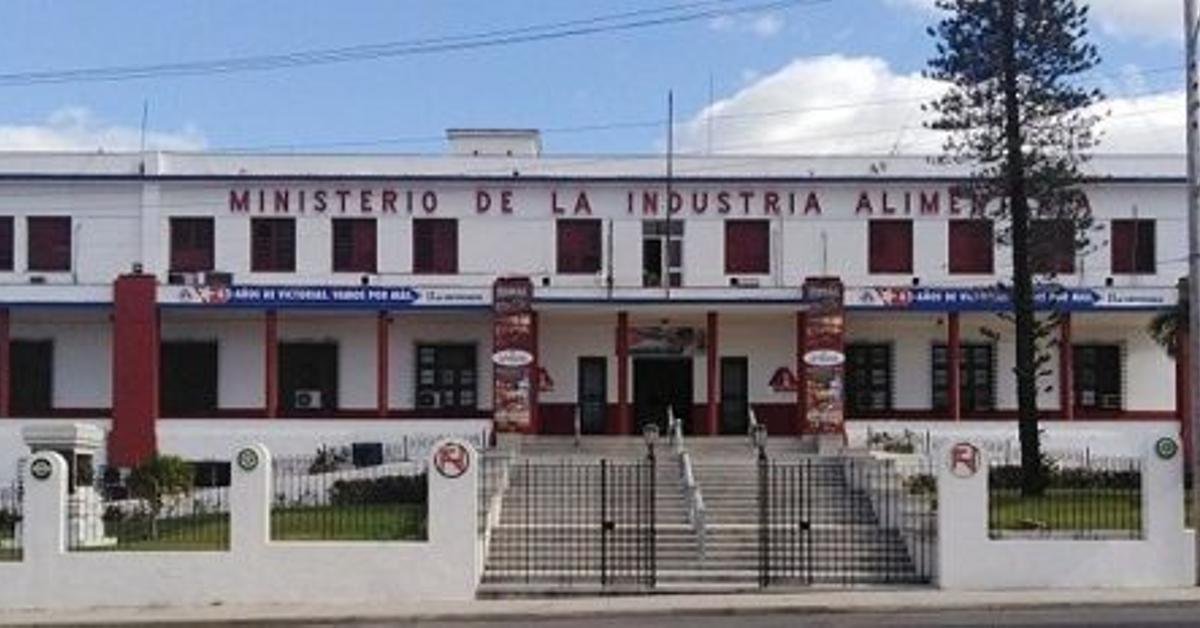
Among the changes it proposes is the creation of the Ministry of Agri-Food, which will be in charge of “directing and controlling state policy regarding the possession and sustainable use of the country’s agricultural and forestry area, agricultural, sugarcane and forestry production; the food industry, sugar and its derivatives, beverages and liquors, as well as fishing activity, and its marketing.”
Cuban President Miguel Díaz-Canel advanced during an interview last April that the ministerial apparatus would be cut to seek efficiency in times of serious economic crisis and reduce bureaucracy.
A few days later, the Council of Ministers approved a draft law that planned to reduce the number of Central State Administration agencies from 27 to 21, which ultimately remained at one less.
The legislative project, which will probably be presented for approval by the Assembly in its session next July, plans to convert the Institute of Information and Social Communication into a Ministry. It is one of those that the economist Pedro Monreal has specifically pointed out, critical of the project. “That ‘Ministry of information and social communication’ borders on that of a ‘Ministry of truth,'” the expert ironically said.
Monreal has also highlighted the unnecessary nature of “maintaining the term planning” in the economic super-ministry, something he describes as an “ideological ornament.”
Nor has he been convinced by the existence of a Ministry of Environment, Habitat and Housing, which brings together the environment, hydraulic resources, territorial planning, urban planning, national cadastre and housing. “Housing in Cuba has less to do with habitat than with the investment process. A Ministry of Construction and Housing was more rational,” he said on social networks.
“Housing in Cuba has less to do with the habitat than with the investment process. A Ministry of Construction and Housing was more rational”
Other reforms of the state apparatus fall on the National Institute of Sports, Physical Education and Recreation (Inder), which will become the Ministry of Sports and Recreation.
Likewise, the current Ministry of Higher Education will assimilate the functions of science and technology, while the industry portfolio will be unified with the construction portfolio.
The rest of the ministries are those of Commerce and Foreign Investment; Culture; Education, Energy and Mines; Communications; Justice; Foreign Affairs, Public Health, Labor and Social Security; Tourism; Revolutionary Armed Forces; Interior and Transportation:
This Law will come into force 60 days after its publication in the Official Gazette of the Republic, and from then on the ministers will have a period of up to one year to carry out organizational movements in the organization they direct.
The list looks like this:
1. Ministry of Agri-Food
2. Ministry of Commerce and Foreign Investment;
3. Ministry of Culture;
4. Ministry of Sports and Recreation;
5. Ministry of Economy, Finance and Planning;
6. Ministry of Education;
7. Ministry of Higher Education, Science and Technology;
8. Ministry of Energy and Mines;
9. Ministry of Industries and Construction;
10. Ministry of Information and Social Communication;
11. Ministry of Communications
12. Ministry of Justice;
13. Ministry of Environment, Habitat and Housing;
14. Ministry of Foreign Affairs;
15. Ministry of Public Health;
16. Ministry of Labor and Social Security;
17. Ministry of Tourism;
18. Ministry of the Revolutionary Armed Forces;
19. Ministry of the Interior; and
20. Ministry of Transportation.