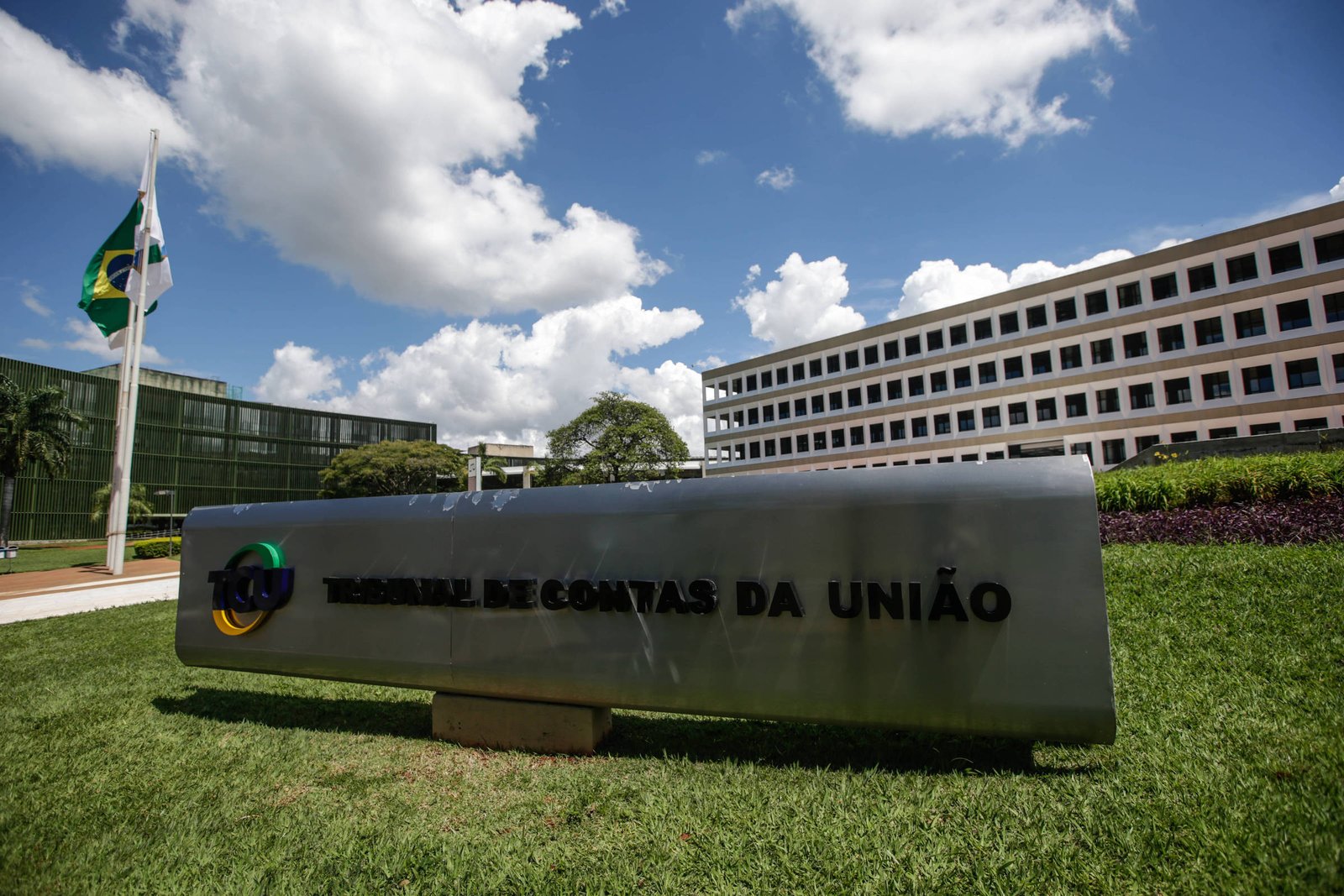
THE use of funds and of state companies to facilitate expenses and circumvent the Budget limits will lead to a reservation in the accounts of President Luiz Inácio’s government Lula da Silva (PT) of 2025, to be judged by the TCU (Federal Audit Court) next Wednesday (10).
The accounts must be approved, but the reservation indicates the existence of irregularities that must be corrected by management. In practice, it works as a warning about issues that will come under the court’s scrutiny in the coming years. Recurrence may create a risk of liability for those involved in the future.
Since 2000, the TCU has recommended the approval of presidential accounts with reservations. The last one to obtain unrestricted approval was Fernando Henrique Cardoso, in 1999. The last rejections, in turn, were during the Dilma Rousseff administration, in 2014 and 2015. The court’s opinion supports the decision of the National Congress, which has the final say on the issue.
Other topics will also be subject to reservations, such as the granting of a sovereign guarantee for the Correios loan without sufficient risk analysisthe revenue projections included in the 2025 Budget —according to the TCU, overestimated by R$60 billion— and the granting of new tax benefits without observing current legislation.
When contacted, the Ministries of Finance, Planning and the Civil House did not respond until the publication of this text.
Some of these topics repeat criticisms already made by the court in trials in recent weeks. The rapporteur of the process, Minister Benjamin Zymler, has been one of the toughest in analyzing the Lula government’s fiscal management.
There is still an expectation regarding Minister Jorge Oliveira’s vote. Appointed to the TCU by former president Jair Bolsonaro (PL), he will be the new president of the court of accounts from December 2026. His position in the trial is seen as an anticipation of the tone he will adopt in command of the court, especially if Lula is re-elected.
The use of funds to implement public policies is one of the TCU’s concerns, due to the low transparency in the application of resources.
Among the targets of the reservation are Fipem (a fund used to manage payments for the Pé-de-Meia program) and Firece (which today manages resources destined for the reconstruction of Rio Grande do Sul). Fadpu (Fund for the Improvement of the Public Defender’s Office of the Union), FNDIT (National Fund for Industrial and Technological Development) and FIIS (Social Infrastructure Investment Fund) were also listed.
The court of accounts also criticizes the increasing use of funds to operate credit granting policies, which result in the granting of a subsidy not explained in the Budget. These operations do not affect fiscal rules, such as the framework’s expenditure limit or the primary result target, but they contribute to increasing the country’s public debt.
As shown by Sheetloans granted by the National Treasury to public funds and banks to finance government policies grew 34.5% in one year, reaching R$307.2 billion in 2025according to data from the General Balance Sheet of the Union. In values, the increase was R$ 78.7 billion in the period, without discounting the effects of inflation.
In 2026, the election year, the Lula government continued to expand this practice. This year alone, the Executive has already allocated R$ 107.5 billion to new lines of credit, whose implicit subsidy will cost at least R$27 billion over the next few years. New measures will still be implemented, such as a program for delivery drivers to finance the purchase of motorcycles.
In relation to state-owned companies, the main focus of criticism is PPSA (Petróleo Pré-Sal SA), a public company responsible for selling the oil to which the Union is entitled under sharing contracts. A law sanctioned at the end of 2024 authorizes the company to deduct operating expenses linked to the sale of oil from the amounts transferred to the Union. For the TCU, this is an illegal maneuver to authorize expenses without them having to go through the Budget.
On the revenue side, the court of accounts pointed to an overestimate of around R$60 billion in the collection foreseen in the LOA (Annual Budget Law) of 2025. For the court, the incident shows disagreement with the principles of transparency and responsibility in the management of accounts, both provided for in the LRF (Fiscal Responsibility Law).
The government itself ended up having to recognize the need for adjustments in May 2025, when the economic team raised the IOF (Tax on Financial Operations) and froze R$31 billion in expenses so as not to violate fiscal rules. The announcement should have taken place earlier, in March, but the government managed to coordinate with Congress the postponement of the vote on the Budget — thereby postponing the political strain resulting from the measures.
On the occasion, the special secretary of the Federal Revenue, Robinson Barreirinhas, acknowledged that the government removed from the projections R$ 81.5 billion previously recorded as extraordinary revenue. One of them, relating to agreements expected after the judgment of tax debts at Carf (Administrative Council for Tax Appeals), entered the TCU’s sights and the methodology was considered inadequate by the Revenue technicians themselves.
Another caveat pointed out by the TCU is the granting and implementation of new tax exemptions without impact calculations and compensation measures. These are requirements set out in the Constitution and the LRF.
PARLIAMENTARY AMENDMENTS
The court will also issue a warning as it considers the transparency and traceability mechanisms for parliamentary amendments executed through programs linked to the Executive, without the specific amendment stamp, to be inadequate.
The technicians identified signs of specific objects and beneficiaries being indicated, in addition to the distribution of quotas among parliamentarians, without sufficient instruments to allow public monitoring of these resources.
The issue has been at the center of a dispute between Congress and the Judiciary since 2024, when the STF (Supreme Federal Court), in decisions reported by minister Flávio Dino, started to demand greater transparency and traceability criteria for the execution of these funds, used by congressmen to irrigate their electoral strongholds.
The court of accounts has adopted a more critical stance in relation to the government’s fiscal management. Recently, for example, the court’s technical area opened proceedings to determine responsibilities at the Federal Revenue, due to a decree that benefited the automotive sector, and at the National Treasury, regarding the granting of the guarantee for the R$12 billion loan to Correios.