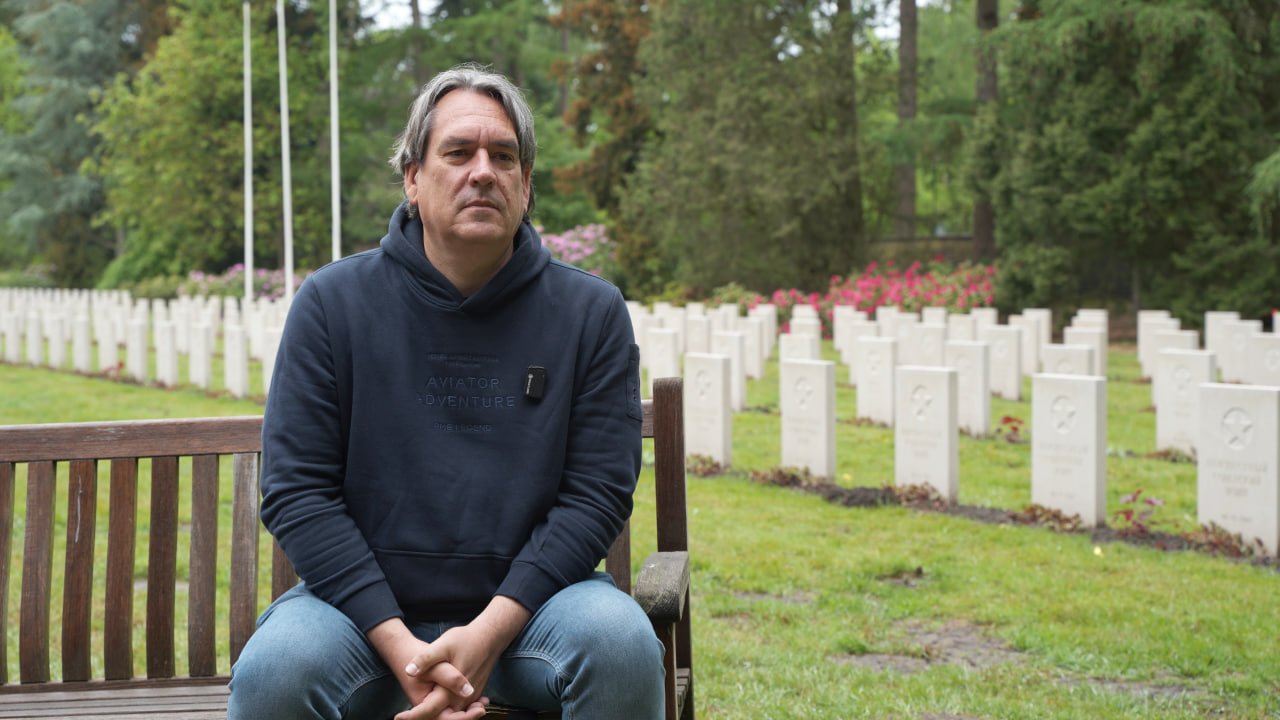
Kun.uz was in one of the infamous camps of the Nazis in the Netherlands and visited the cemetery where the killed soldiers, especially Uzbeks, were buried.
Journalist and researcher Remko Reyding spoke about what happened in the camp, identification of the dead and search for their relatives.
In this cemetery, 101 soldiers were buried in an unknown state. According to Reiding, most of them are Uzbeks. The researcher has so far identified one soldier in this group.
Sh. Sharipov: First, I would like to introduce you to the Uzbek audience. who are you
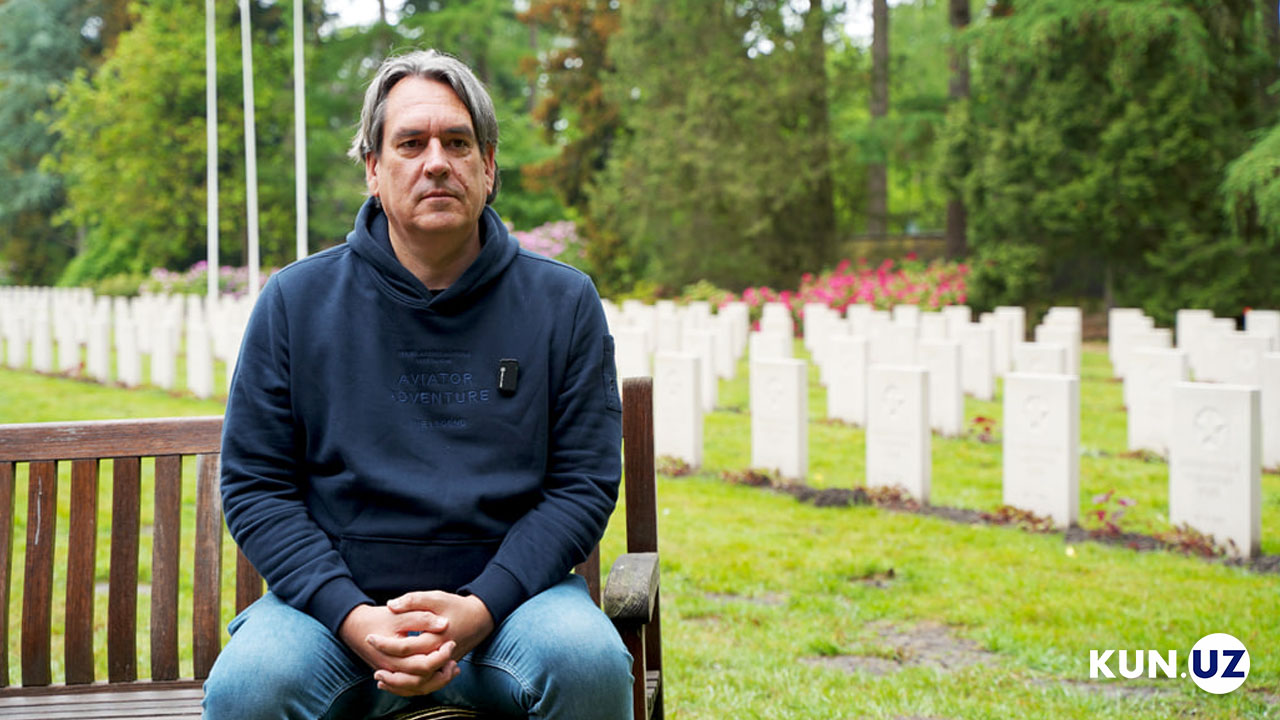
R. Reading: My name is Remko Ryding. I came here for the first time 28 years ago and saw many war victims buried here. 865 war victims, including many Uzbeks, lie here. I wanted to be a sports journalist, but I saw that there are a lot of forgotten soldiers, unknown soldiers. I tried to find information about their identity and relatives, and in the end, it became my life’s work.
Sh. Sharipov: How many Uzbeks are lying here? Is this known?
R. Reading: It is difficult to determine the exact number of Uzbeks, because there are many Uzbeks in the first group – 101 unknown fighters. They are still lying on the field of glory as unknown Soviet fighters. Therefore, we cannot say exactly how many of them, that is, Uzbeks. But there are other groups in the cemetery, where there are known Uzbek soldiers. So, there are dozens, maybe more than a hundred soldiers from Uzbekistan. I started looking for information, looking for my relatives 28 years ago. Currently, more than 250 soldiers have been identified and 227 families have been found. Among those we found, there are people who lived in Uzbekistan. We are very happy to know that there is a soldier from Uzbekistan in the 101st group, this soldier is Raim Salomov.
Sh. Sharipov: How to find information? What will the identification be?
R. Reading: Oh, it’s so hard to explain. But in the end it’s a lot of work in the archives. I’m trying to find out every step a soldier took before he died, before he was buried here. Each time you find a new document with more information. Thus, a soldier, for example, Andrei Ivanov, remains Andrei Vladimirovich Ivanov, the place of birth, the name of his wife will be clear. In this way, it is possible to find out who the soldier is. If there is enough information during a search in the archives, it is possible to find out who he is.
Sh. Sharipov: There was a camp here, wasn’t it?
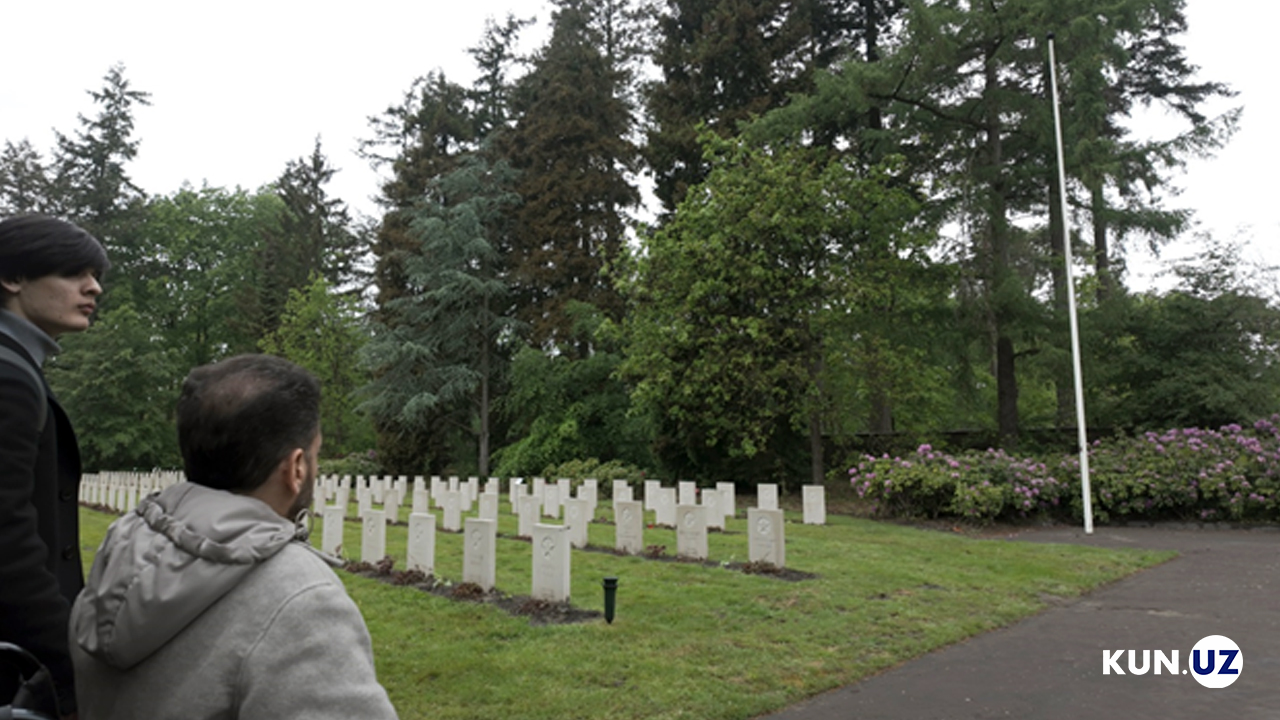
R. Reading: One kilometer from here. Here the Germans actually built a camp for the Dutch. About 40 thousand Dutch prisoners were kept. First, 101 Soviet fighters were sent here. Most of them were from Uzbekistan and Kazakhstan. They are selected based on their appearance. They wanted to show us that the Russians are completely different people, people from the bottom, they said, “We should fight together with the Germans against Bolshevism in the East.” The locals did not take it well and tried to help the captives, giving them food and water. But unfortunately, their fate in the camp was very bad, 24 people died of hunger and disease. The remaining 77 people were shot on April 9 of the forty-second year.
Sh. Sharipov: That is, the Netherlands wanted to prove something to the prisoners…
R. Reading: To the Dutch captive, but to the Dutch people. After the war, the guards said that everything was just like that, they were shown as low people, as propaganda they wanted to show what low people live in the east. But in the end, this campaign did not work.
Sh. Sharipov: Do you know how this happened? Now feature films are being shot, various scenes are being shown. Are these true?
R. Reading: I wrote a book in which a whole story was written, documentary work was done. Then others began to use this information, made various projects, for example, a feature film appeared. But this is a feature film. If people want to know exactly how things went, they should read my book, because there’s no fiction in there, you won’t find it.
Sh. Sharipov: What did you find out? It is interesting to the average viewer, in what ways did the Nazis try to make them appear “not human”?
R. Reading: That’s a good question. They made a lot of comments, for example, they said to the Dutch: “these monkeys are your allies. They are aboriginal people, we are building a cemetery for them here.” Can you imagine, they were all still alive… They wouldn’t give food. They did not receive medical assistance. Because “they are not human, so why do you need a doctor.” In general, it was difficult for the Dutch in this camp, but the “Russians” did not receive food and help at all. Heavy.
Sh. Sharipov: Apart from hunger, what tests did they put on their heads?
R. Reading: They were often beaten. They even beat him to death. There were other cases.
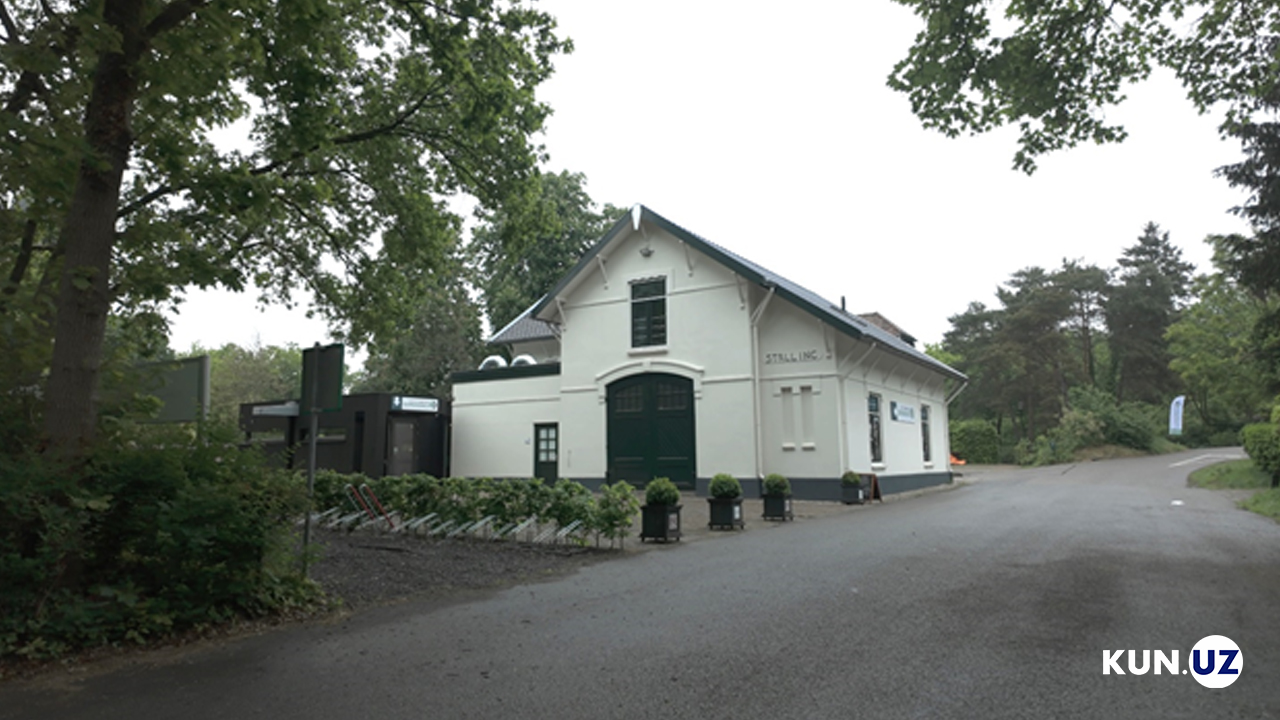
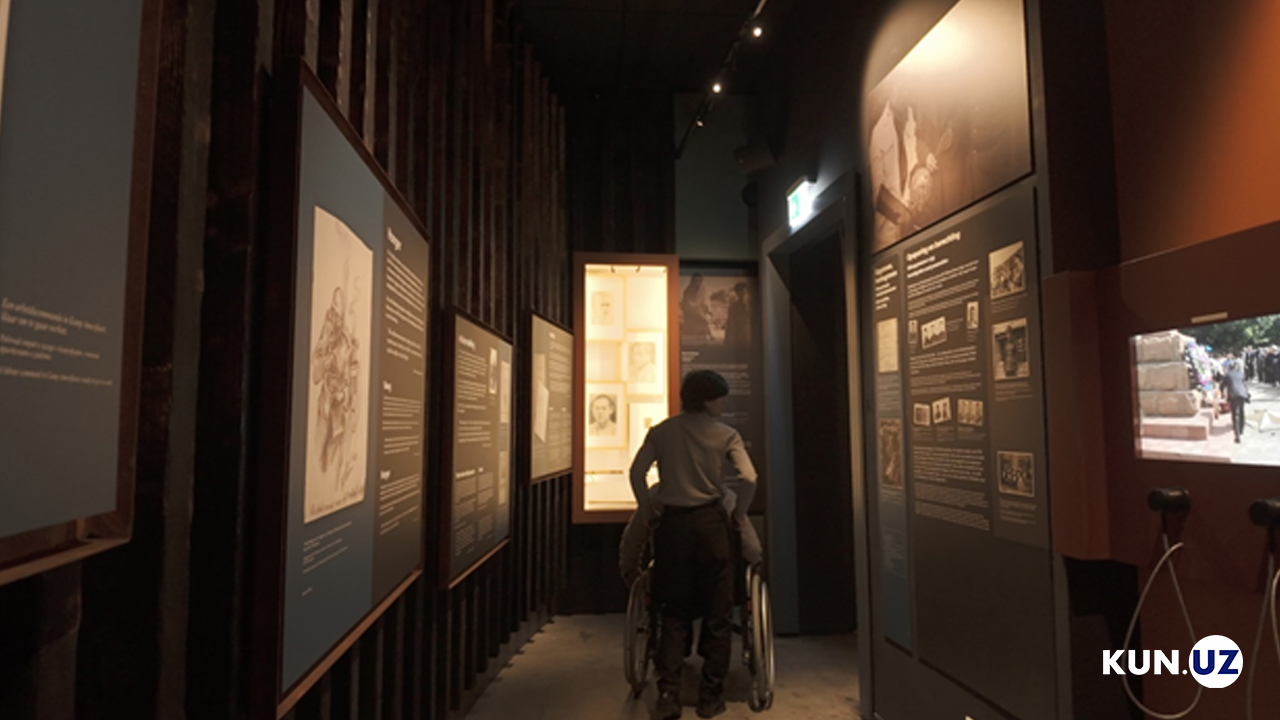
A museum is also located here. We entered it.
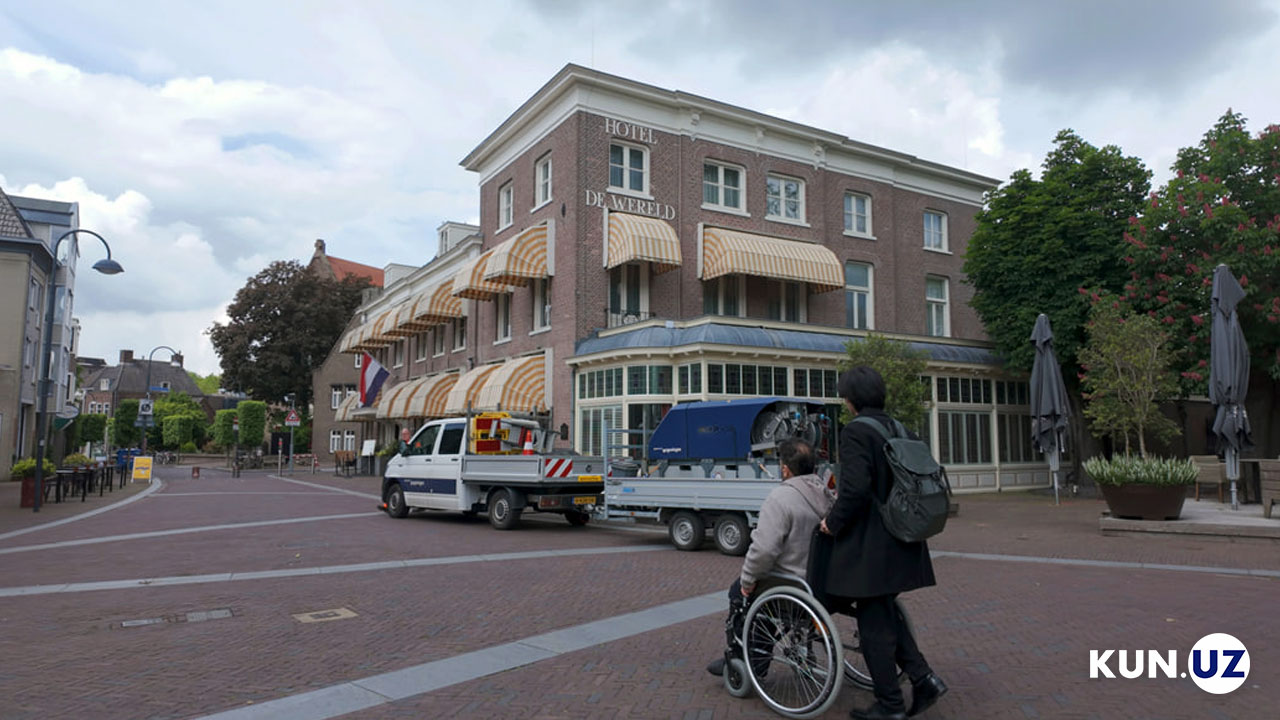
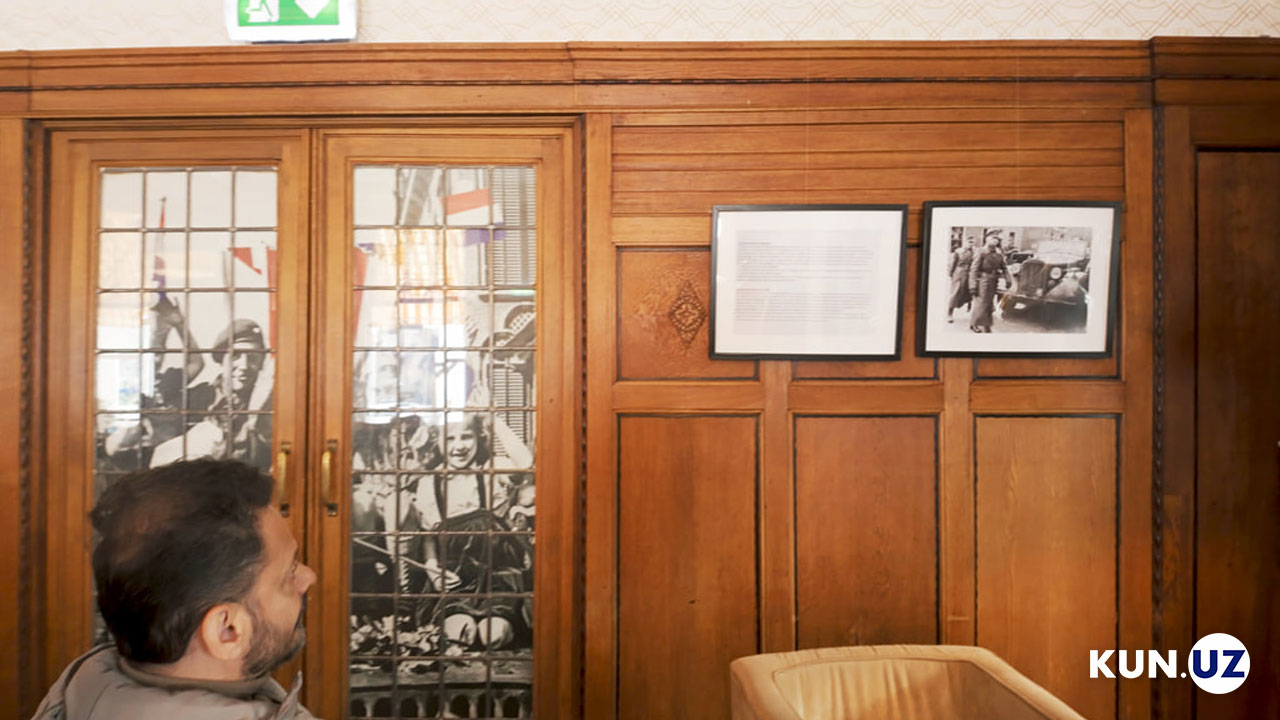
We were also here at the Hotel de Wereld, where the surrender of the German forces in the Netherlands was negotiated on May 5, 1945.