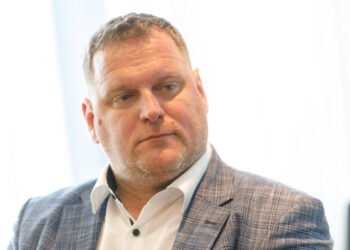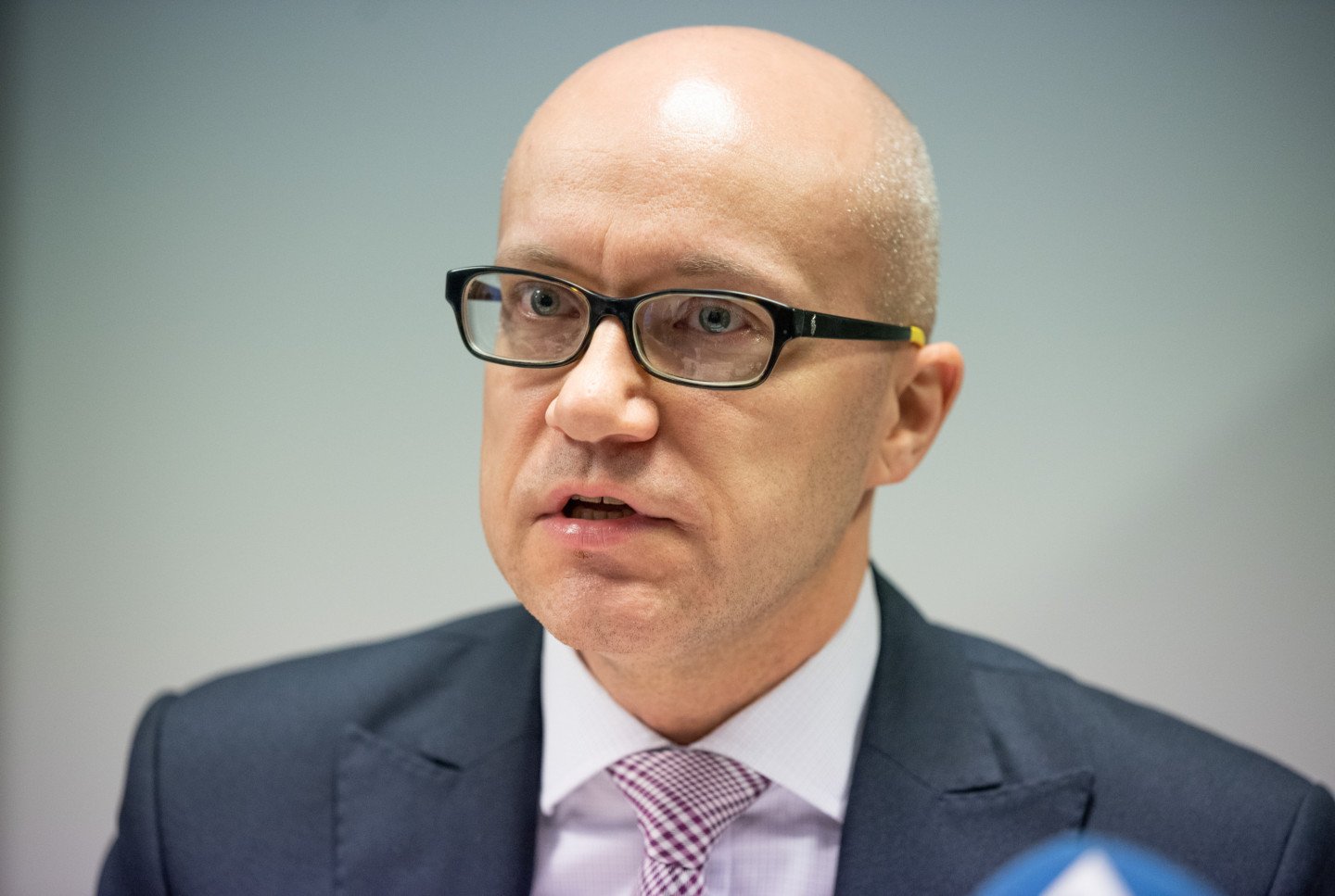
If I had to extract the main idea from the report of the State Audit Office (VK) to the Saeima, which was read by the State Comptroller Edgars Korchagins yesterday from the podium of the Saeima, then it would be: “It is the duty of us, working in the state administration, to speak a clear language and show the real situation, even if it is not bright or reveals the shortcomings of previously made decisions. Better bitter truth than sugary deception.”
If the quoted sentence is purely conceptual, then one cannot fail to mention the next one, which is already more practical: “An integral prerequisite for the development of an institution, municipality, industry or the entire country is to look from time to time to see what we can do without in the future. Last year showed that there are institutions and processes in the state administration that we can do without. Fewer institutions, fewer joint-stock companies, less expenses. This is not an end in itself, but a tool for more efficient and effective for a more sustainable country. It can make the work of the state administration faster and cheaper and free up resources for doing urgently needed work.”
You could say golden words. Does anyone dare to question these words, object to something, speak against them? There were none in the Saeima yesterday. All the debaters said State Control thank you for the good, valuable work that VK has done and wish you all the best for the future. Do you feel strange when you read these words? Isn’t it the same thing that appears Korchagin a hint of the so-called “sugary con”?
The annual report of the SC indicates that the rate of return on the impact achieved as a result of the implementation of the recommendations provided in the SC’s audits was 1:2.27 in 2025. The total expenses of the State Audit Office in 2025 are 7,869,509 euros, compared to the calculated impact on the state administration (society as a whole) – 17,833,816 euros.
This benefit of 17,833,816 euros of society and its almost absurd accuracy (there was only one cent after the decimal point missing) extremely aptly embodies the actually vague, vague, decades-long situation that is connected with the work of the Supreme Court itself, its functions and prerogatives. On the one hand, the State Audit Office provides regular information on multimillion-dollar wastages, on useless, even semi-criminal cases of spending budget money, but what is the result of these audits?
As someone, Korchagin could answer such a question in feigned amazement and say with a winner’s smile: here is a profit of 17,833,816 euros. Specific and precise. To the last cent. There is no “less than 20 million” euros, but everything is clearer than clear – so and so millions, so and so thousands and another 816 euros. No euro is forgotten. Everything is accurately listed.
If anyone still has doubts that the VK is, if not the main, then one of the main improvers of public administration, then MP Liene Gätere steps up to the podium and throws the ace of trumps on the table: 92% of the VK’s recommendations have been implemented. “This is a very good indicator. And we must continue to maintain this level and aim for 100 percent implementation of the recommendations of the National Audit Office, because every recommendation that is not implemented means lost opportunities to save millions and improve public management.”
There is some confusion when listening to these hymns. Who is in a parallel reality here? Where is this 92%? Where are the administrative conclusions, personnel suspensions, staff transfers, checks on whether there are grounds to initiate criminal proceedings? Where are the abolished “institutions and processes we can do without”?
It must be agreed that VK can wring their hands without the slightest sense of guilt – it is no longer their competence. It is already the competence of the prosecutor’s office, the government and the management of the state administration, what to do next with the audit materials of the SC. If nothing serious follows, then it is no longer VK’s business.
When listening and evaluating the Saeima debate on the annual report of the SC, two things should be mentioned. The first. Latvia is one of those rare countries in the world (the only one in the EU) where the supreme legislator (Saeima) as a body that consumes state (society) finances is beyond any external audit. The SC can conduct audits of any state administrative body, except for the Saeima.
There is no political movement that this situation should be changed in the corridors and offices of the Saeima. From time to time someone will mention something, but neither (I emphasize, not one) party has actively taken this issue forward for serious discussion in the political arena.
The second. Although the Supreme Court, like any controlling body, is a body whose name can be easily used for political purposes, politicians did not rush to the rostrum with their “exposing” ideas and heart-warming speeches even on the eve of the elections. Polite words of thanks for good work and general “standard” encouragement to strengthen and ensure the independence of the SC.
The explanation for this reluctance is extremely simple. The current socio-political status of the State Council, when the public complains about the wasteful spending discovered in the audits for a few days and then quickly forgets, fully satisfies the political class. There is no political will to significantly change something and increase the level of influence of VK. Everyone is satisfied that we have such a VC, whose calculated impact (so “on paper”) on the state administration is 17.8 million euros, but whose audit material’s political-administrative impact, not to mention the legal impact, has so far been extremely insignificant.
None of the debaters made any concrete, practical proposals on how to increase the “weight” of the audits of the Central Government, so that the revealed wastages and inefficient spending are on the public agenda not for a few days, but for as long as some organizational decisions are made.
It can already be said that it is largely the media’s prerogative to maintain interest and tension, but the reality of Latvia is that without the support of at least part of the political class, any issue soon sinks into the daily informational mess. Yesterday’s Saeima debate on this issue (it lasted less than an hour and only nine MPs participated) clearly showed that we (MPs) are completely satisfied with the VK as it is now. Formally strict and demanding, effectively toothless.