Another summer season begins with restrictions
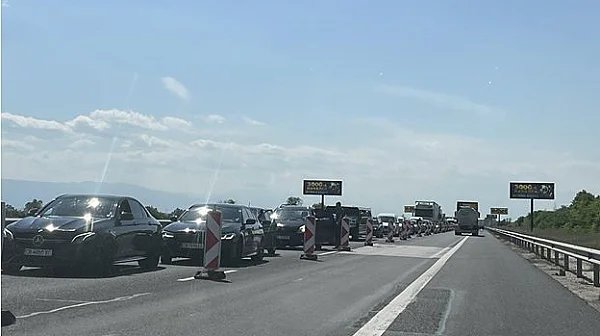
On Trakia, the repair will affect nearly 11 kilometers of the road to Burgas between the 218th and 229th kilometers. About 9 kilometers in the direction of Varna between the 23rd and 32nd kilometers will be renovated along “Hemus”.
In both places, traffic will be diverted in both directions to one lane.
In theory, this seems like a temporary measure for a few weeks. However, in practice, every driver knows what such an organization means at the beginning of the summer season – the risk of queues, traffic jams and hours of lost time.
Especially when it comes to two of the busiest highways in the country.
Kresna showed how easily chaos ensues
We don’t have to go back very far. Only days ago thousands of people spent hours in traffic jams around Kresna. Repairs to the gorge coincided with one of the busiest trips of the year – the weekend around May 24.
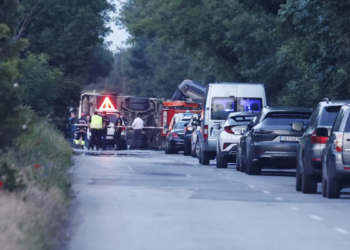
The disaster near Simitli on the way home on May 25 further complicated the situation. But she wasn’t the only cause of the chaos. Columns formed even before the incident. Traffic moved for meters in minutes, and a journey that normally takes significantly less time became an ordeal for thousands of drivers.
Then the logical question arose: if the institutions know in advance that a traffic peak is coming, why are the repairs being carried out at this exact moment?
“Thrace” has already taught similar lessons
Kresna is no exception. On Easter this year’s journey on “Thrace” also showed how fragile the movement’s organization is. A chain accident between seven cars led to hours of delay in the direction of Sofia.
Yes, the cause of the accident is most likely failure to maintain a distance. But the incident revealed another problem. When the highway is operating close to its maximum capacity, one accident is enough to block traffic for tens of kilometers.
The result was nearly six hours from the sea to Sofia, a distance that would normally be taken considerably faster.
The memory of the summer of 2024.
July 2024 was even more telling.
Then the trip from Burgas to Sofia took nearly seven o’clock. Drivers were diverted through villages, secondary roads and detours due to repairs and accidents.
The paradox was that, days earlier, the API assured that during the active summer season there would be no serious repair works that would hinder traffic to the sea. The reality turned out to be different.
The problem is not the repairs
Let’s be honest – nobody wants highways to fall apart. The problem is not in the repairs themselves. The problem is in the way they are organized.
The question is not whether it needs to be repaired. The question is whether repairs can be planned to cause less damage to traffic.
How do they do it in Europe?
In most European countries, repairs on key highways also cause inconvenience. The difference is that ways to limit these inconveniences are often sought.
Of course, there are also traffic jams in Germany, France or Italy. The difference is that there the public discussion is usually focused on how to reduce the impact of the repair on the traffic, while in Bulgaria we often argue whether it was even appropriate to start it exactly in the period of the most intense traffic.
In large infrastructure projects, temporary routes are often built or solutions are sought to keep the maximum number of lanes open.
The goal is not just to finish the renovation. The goal is for society to pay the lowest possible price for it.
The Bulgarian price of bad organization
In our country, this price often remains invisible. It is measured in hours spent in columns. In hundreds of liters of fuel burned. In missed appointments and canceled plans. In tension that builds up behind the wheel and sometimes leads to more accidents.
The new repairs on Trakia and Hemus are likely to be completed by the end of June. After that, the movement will normalize and the topic will gradually disappear from the news.
But the question will remain. Why is it that every year we know in advance when the busiest travel period will be and yet we keep getting stuck in the same traffic jams? Why do we talk about the same issues every summer?
And above all, why does the state seem prepared for the repairs themselves, but not for their consequences? Because repairs are inevitable. The chaos around them shouldn’t be.