Tuesday, June 9, 2026
    The GeoStrategic Consensus
    No Result
    View All Result
    • Login
    • HOME
    • AMERICAS
      • Argentina
      • Brazil
      • Canada
      • Chile
      • Colombia
      • Costa Rica
      • Cuba
      • Dominican Republic
      • Ecuador
      • El Salvador
      • Greenland
      • Guatemala
      • Honduras
      • Mexico
      • Nicaragua
      • Panama
      • Paraguay
      • Peru
      • United States
      • Uruguay
      • Venezuela
    • ASIA-PACIFIC
      • Australia
      • Brunei Darussalam
      • Cambodia
      • China
      • Federated States of Micronesia
      • Fiji
      • Indonesia
      • Japan
      • Kiribati
      • Laos
      • Malaysia
      • Marshall Islands
      • Mongolia
      • Myanmar
      • Nauru
      • New Zealand
      • North Korea
      • Palau
      • Papua New Guinea
      • Philippines
      • Samoa
      • Singapore
      • Solomon Islands
      • South Korea
      • Taiwan
      • Thailand
      • Timor-Leste
      • Tonga
      • Tuvalu
      • Vanuatu
      • Vietnam
    • CARICOM
      • CARICOM – Non-English
        • Haiti
        • Suriname
      • CARICOM Associates
        • Anguilla
        • Bermuda
        • British-Virgin-Islands
        • Cayman-Islands
        • Curacao
        • Turks-and-Caicos
      • CARICOM English
        • Antigua and Barbuda
        • Barbados
        • Belize
        • Dominica
        • Grenada
        • Guyana
        • Jamaica
        • Montserrat
        • Saint Kitts and Nevis
        • Saint Lucia
        • Saint Vincent and the Grenadines
        • The Bahamas
        • Trinidad and Tobago
    • EURASIA
      • Armenia
      • Azerbaijan
      • Balarus
      • Georgia
      • Kazakhstan
      • Kyrgyzstan
      • Moldova
      • Russia
      • Tajikistan
      • Turkmenistan
      • Ukraine
      • Uzbekistan
    • EUROPE
      • Albania
      • Andorra
      • Austria
      • Bosnia and Herzegovina
      • Bulgaria
      • Croatia
      • Cyprus
      • Czech Republic
      • Denmark
      • Estonia
      • Finland
      • France
      • Germany
      • Greece
      • Holy See
      • Hungary
      • Iceland
      • Ireland
      • Italy
      • Kosovo
      • Latvia
      • Liechtenstein
      • Lithuania
      • Luxembourg
      • Malta
      • Monaco
      • Montenegro
      • Netherlands
      • North Macedonia
      • Norway
      • Poland
      • Portugal
      • Romania
      • San Marino
      • Serbia
      • Slovakia
      • Slovenia
      • Spain
      • Sweden
      • Switzerland
      • United Kingdom
    • MIDDLE EAST AND NORTH AFRICA
      • Algeria
      • Bahrain
      • Egypt
      • Iran
      • Iraq
      • Israel
      • Jordan
      • Kuwait
      • Lebanon
      • Lybia
      • Morocco
      • Oman
      • Palestinian Territories
      • Qatar
      • Saudi Arabia
      • Syria
      • Tunisia
      • Turkey
      • United Arab Emirates
      • Western Sahara
      • Yemen
    • SOUTH ASIA
      • Afghanistan
      • Bangladesh
      • Bhutan
      • India
      • Maldives
      • Nepal
      • Pakistan
      • Sri Lanka
    • SUB-SAHARAN AFRICA
      • Angola
      • Benin
      • Botswana
      • Burkina Faso
      • Burundi
      • Cabo Verde
      • Cameroon
      • Central African Republic
      • Chad
      • Comoros
      • Cote d’Ivoire
      • Democratic Republic of the Congo
      • Djibouti
      • Equatorial Guinea
      • Eritrea
      • Eswatini
      • Ethiopia
      • Gabon
      • Gambia
      • Ghana
      • Guinea
      • Guinea Bissau
      • Kenya
      • Lesotho
      • Liberia
      • Madagascar
      • Malawi
      • Mali
      • Mauritania
      • Mauritius
      • Mozambique
      • Namibia
      • Niger
      • Nigeria
      • Republic of the Congo
      • Rwanda
      • Sao Tome and Principe
      • Senegal
      • Seychelles
      • Sierra Leone
      • Somalia
      • South Africa
      • South Sudan
      • Sudan
      • Tanzania
      • Togo
      • Uganda
      • Zambia
      • Zimbabwe
    • HOME
    • AMERICAS
      • Argentina
      • Brazil
      • Canada
      • Chile
      • Colombia
      • Costa Rica
      • Cuba
      • Dominican Republic
      • Ecuador
      • El Salvador
      • Greenland
      • Guatemala
      • Honduras
      • Mexico
      • Nicaragua
      • Panama
      • Paraguay
      • Peru
      • United States
      • Uruguay
      • Venezuela
    • ASIA-PACIFIC
      • Australia
      • Brunei Darussalam
      • Cambodia
      • China
      • Federated States of Micronesia
      • Fiji
      • Indonesia
      • Japan
      • Kiribati
      • Laos
      • Malaysia
      • Marshall Islands
      • Mongolia
      • Myanmar
      • Nauru
      • New Zealand
      • North Korea
      • Palau
      • Papua New Guinea
      • Philippines
      • Samoa
      • Singapore
      • Solomon Islands
      • South Korea
      • Taiwan
      • Thailand
      • Timor-Leste
      • Tonga
      • Tuvalu
      • Vanuatu
      • Vietnam
    • CARICOM
      • CARICOM – Non-English
        • Haiti
        • Suriname
      • CARICOM Associates
        • Anguilla
        • Bermuda
        • British-Virgin-Islands
        • Cayman-Islands
        • Curacao
        • Turks-and-Caicos
      • CARICOM English
        • Antigua and Barbuda
        • Barbados
        • Belize
        • Dominica
        • Grenada
        • Guyana
        • Jamaica
        • Montserrat
        • Saint Kitts and Nevis
        • Saint Lucia
        • Saint Vincent and the Grenadines
        • The Bahamas
        • Trinidad and Tobago
    • EURASIA
      • Armenia
      • Azerbaijan
      • Balarus
      • Georgia
      • Kazakhstan
      • Kyrgyzstan
      • Moldova
      • Russia
      • Tajikistan
      • Turkmenistan
      • Ukraine
      • Uzbekistan
    • EUROPE
      • Albania
      • Andorra
      • Austria
      • Bosnia and Herzegovina
      • Bulgaria
      • Croatia
      • Cyprus
      • Czech Republic
      • Denmark
      • Estonia
      • Finland
      • France
      • Germany
      • Greece
      • Holy See
      • Hungary
      • Iceland
      • Ireland
      • Italy
      • Kosovo
      • Latvia
      • Liechtenstein
      • Lithuania
      • Luxembourg
      • Malta
      • Monaco
      • Montenegro
      • Netherlands
      • North Macedonia
      • Norway
      • Poland
      • Portugal
      • Romania
      • San Marino
      • Serbia
      • Slovakia
      • Slovenia
      • Spain
      • Sweden
      • Switzerland
      • United Kingdom
    • MIDDLE EAST AND NORTH AFRICA
      • Algeria
      • Bahrain
      • Egypt
      • Iran
      • Iraq
      • Israel
      • Jordan
      • Kuwait
      • Lebanon
      • Lybia
      • Morocco
      • Oman
      • Palestinian Territories
      • Qatar
      • Saudi Arabia
      • Syria
      • Tunisia
      • Turkey
      • United Arab Emirates
      • Western Sahara
      • Yemen
    • SOUTH ASIA
      • Afghanistan
      • Bangladesh
      • Bhutan
      • India
      • Maldives
      • Nepal
      • Pakistan
      • Sri Lanka
    • SUB-SAHARAN AFRICA
      • Angola
      • Benin
      • Botswana
      • Burkina Faso
      • Burundi
      • Cabo Verde
      • Cameroon
      • Central African Republic
      • Chad
      • Comoros
      • Cote d’Ivoire
      • Democratic Republic of the Congo
      • Djibouti
      • Equatorial Guinea
      • Eritrea
      • Eswatini
      • Ethiopia
      • Gabon
      • Gambia
      • Ghana
      • Guinea
      • Guinea Bissau
      • Kenya
      • Lesotho
      • Liberia
      • Madagascar
      • Malawi
      • Mali
      • Mauritania
      • Mauritius
      • Mozambique
      • Namibia
      • Niger
      • Nigeria
      • Republic of the Congo
      • Rwanda
      • Sao Tome and Principe
      • Senegal
      • Seychelles
      • Sierra Leone
      • Somalia
      • South Africa
      • South Sudan
      • Sudan
      • Tanzania
      • Togo
      • Uganda
      • Zambia
      • Zimbabwe
    No Result
    View All Result
    Agentially
    No Result
    View All Result
    Home MIDDLE EAST and NORTH AFRICA Morocco

    Continuing education: a system running out of steam, which the CESE recommends

    The Analyst by The Analyst
    June 9, 2026
    in Morocco
    Continuing education: a system running out of steam, which the CESE recommends


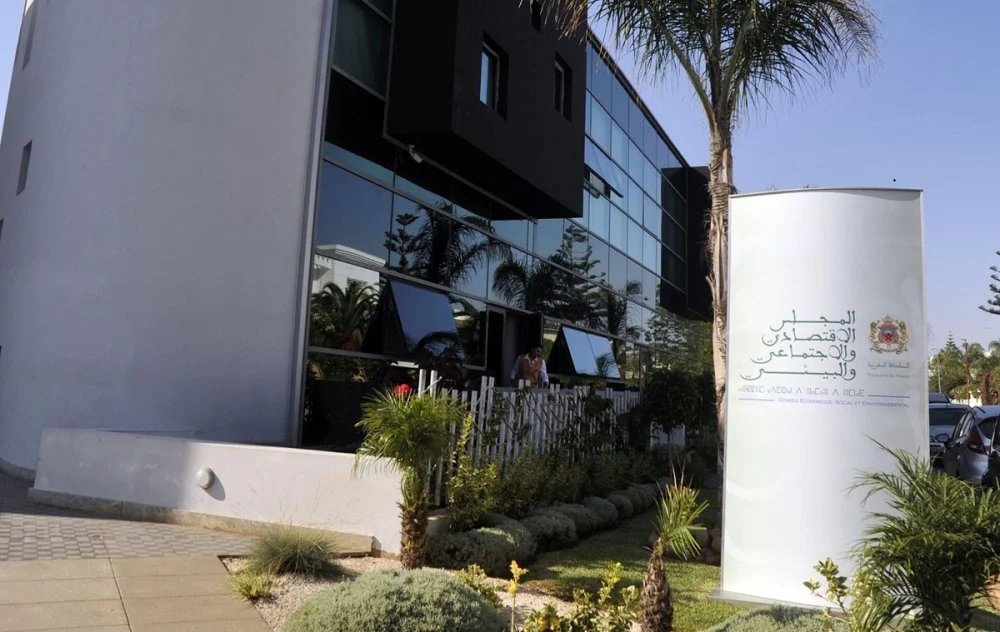
    One number says it all. In 2022, 1,647 companies have benefited special training contracts (CSF), the main public mechanism for financing continuing education in the private sector. A record, certainly, over a decade. But compared to the 315,000 contributing companies, this peak barely represents 0.5% of the pool. Far, very far, from the objective of training annually 20% of employees that was set by the National Vocational Training Strategy 2015-2021. This dropout is not a temporary anomaly: it illustrates, according to the EESC, “structural inadequacies which limit access to systems and reduce their equity as well as their reach”.

    READ ALSO

    Expressed during the 11th African Tax Symposium: Plea in Rabat for strengthened African tax cooperation – Today Morocco

    Baccalaureate fraud: which citizen are we preparing? (Tribune)

    The opinion, adopted by a majority during the 180th ordinary session of the Council held on March 25, 2026, is the result of a self-referral carried out for more than a year, with hearings of ministers, unions, employers’ federations, universities and experts. It draws up a lucid assessment of a system which, despite real progress, particularly in the automobile and aeronautics sectors, has not kept its promises. He formulated a reform program which, if implemented, would constitute a profound break with current practices.

    The great paradox: billions collected, crumbs redistributed

    The heart of the problem lies in an absurd financial equation. On the period 2012–2022approximately 2.7 billion dirhams are collected each year from companies under the vocational training tax (TFP), representing a cumulative amount of 24 billion dirhams over ten years. However, over this same period, only 7.2 billion dirhams were actually reserved for the continuing training of employees. Less than a third.

    For very small and small businesses (TPME)although declared “priority targets” of the system, the situation borders on the absurd. Over ten years, these companies only received 622 million dirhams in total for CSF reimbursements, i.e. less than the 30% share of a single year of TFP. On average, 62 million dirhams per year go to SMEs out of an annual cake of 2.7 billion, or 2.3% of annual contributions for companies which represent the bulk of the national economic fabric.

    The EESC thus underlines the profound inequality in the distribution of funding : it is large companies that benefit the most. In 2014, they received 67.51 million dirhams compared to 27.26 million for all other companies combined. A gap which narrowed slightly in 2022 (73.44 million against 57.90 million), but remains structural. Even more revealing: companies with more than 500 employees trained 47,932 employees, or nearly 25% of the workforce trained, while those with fewer than 10 employees trained only 18,540.

    How to explain this paradox? By an accumulation of obstacles that the report describes with precision. Reimbursement deadlines, firstly: nine months on average at best between the submission of the file and the actual payment of the sums committed. Procedural complexity, then: obtain CSF financing involves successively going through the management committee, the OFPPT board of directors, the central committee of the CSFs, the regional committees, the GIACs and the joint management units. “In many cases, companies simply give up filing an application,” notes the notice. And when they venture to commission a sectoral engineering study, the average time between budget approval and actual delivery reaches up to two years, two years in a world where digital skills become obsolete in eighteen months.

    The consequence is documented by an international comparison scathing. A study of the World Bank on businesses in 2023 reveals that only 9% of Moroccan companies offer official training to their employees. Against 67.9% in France, 55.9% in Canada, 44.1% in Germany, and even 26.7% in Tunisia. Morocco is among the worst performing countries in the MENA region on this indicator.

    Excluded en masse: self-employed, unemployed, workers without a diploma

    If the balance sheet of companies is gloomy, that of workers is even more so. The current CSF system is structurally linked to the CNSS : to access it, you must be an employee of a contributing company. Result: self-employed workers, self-employed people and workers in the informal sector are largely excluded. The opinion recalls a figure from the High Commission for Planning which the CESE describes as “massive challenge” : next to 47% of employed workers do not have any diploma. For these hundreds of thousands of workers, the validation of acquired professional experience (VAEP) should constitute a gateway to the formal economy. Except that this system, introduced into Moroccan law in 2008, has remained a dead letter on an industrial scale: since its launch, only 1,488 people were certified in total. That is, over eighteen years, the equivalent of half a promotion from a medium-sized business school.

    Law No. 60-17 of 2018although presented as a turning point, has certainly extended the scope of beneficiaries to non-employees and people who have lost their jobs. But the CESE emphasizes that “this ambitious extension of the field of beneficiaries was not accompanied by the establishment of a diversified and shared financing model commensurate with the resulting needs”. More serious: the implementing texts of this law have still not been publishedeight years after its promulgation. As for people who have lost their job, the job loss compensation (IPE) system does not include continuing training among the services intended for them.

    The training offer itself suffers from a striking geographical concentration. On the 82 approved organizations And 327 qualified experts of the country, the majority are in Casablanca. This territorial imbalance “disadvantages companies located outside the main economic centers and contributes to accentuating regional disparities,” notes the opinion.

    A breakthrough reform: independent body, dedicated fund, digital platform

    Faced with this picture, the EESC is not proposing marginal adjustments. He calls for systemic reform, articulated around seventeen recommendations which, taken together, constitute a paradigm shift. The flagship measure is institutional: create a national body independent of the OFPPT, with tripartite composition, public authorities, employers, social partners, to manage the entire continuing training policy. This recommendation directly resonates with the new development model, measure no. 7 of which specifically recommends the creation of an independent body distinct from training operators. It also echoes the circular from the Head of Government of February 2025 which recommends “the delegation of the management of continuing training to a dedicated structure” and “the establishment of the company into a true continuing training space”.

    The criticism of current architecture is severe but reasoned. The opinion points out the fact that maintaining the management of continuing training within the OFPPT, as provided for in Article 17 of Law No. 60-17, does not make it possible to “clearly dissociate the functions of operator, manager and regulator, nor to guarantee independent, transparent and performance-oriented management”. For the CESE, as for the Higher Council for Education, Training and Scientific Research, which calls for the “dissociation of the management of financial resources for continuing training from those for initial training”, confusion of roles is at the heart of the dysfunction.

    On a financial level, the EESC recommends guarantee the effective allocation of 30% of the TFP, currently dispersed without clear direction, to the financing of continuing training actions, via the creation of a dedicated fund. For VSEs, it recommends full coverage of training costs, with direct access to a catalog of modules available on a national digital platform covering the entire life cycle of a training action, from request to reimbursement. On the VAEPthe issue is of a completely different magnitude. The EESC calls for deploy the OFPPT as an “operational arm of a VAEP for all”by capitalizing on its territorial network to mobilize professional juries on a national scale. The objective: to make the validation of acquired knowledge a real path to formality for the hundreds of thousands of workers without a diploma, like the integrated public service “France VAE”, launched in 2022.

    These recommendations are part of a context of rapid transformation of the Moroccan labor marketaccentuated by the sporting deadlines of 2030, the rise of industrial and digital professions, and the Kingdom’s climate commitments. The question is no longer whether the system needs to change. It is to know whether the political will will be there so that continuing training ceases to be, in Morocco, a right on paper and finally becomes a lever in reality.


    Source link

    Related Posts

    Expressed during the 11th African Tax Symposium: Plea in Rabat for strengthened African tax cooperation – Today Morocco
    Morocco

    Expressed during the 11th African Tax Symposium: Plea in Rabat for strengthened African tax cooperation – Today Morocco

    June 9, 2026
    Baccalaureate fraud: which citizen are we preparing? (Tribune)
    Morocco

    Baccalaureate fraud: which citizen are we preparing? (Tribune)

    June 8, 2026
    HCP: economic growth improves to 4.9% in 2025 – Today Morocco
    Morocco

    HCP: economic growth improves to 4.9% in 2025 – Today Morocco

    June 8, 2026
    Employer Brand 2026: ReKrute highlights companies that engage, attract and flourish
    Morocco

    Employer Brand 2026: ReKrute highlights companies that engage, attract and flourish

    June 8, 2026
    Concerning an amount of 5 billion dirhams: AMMC validates the subordinated bond issue of OCP – Today Morocco
    Morocco

    Concerning an amount of 5 billion dirhams: AMMC validates the subordinated bond issue of OCP – Today Morocco

    June 8, 2026
    Case of the killed inDrive driver: the story of a tragedy that shook Sidi Taïbi
    Morocco

    Case of the killed inDrive driver: the story of a tragedy that shook Sidi Taïbi

    June 8, 2026
    Next Post
    Concern about the spread of misleading information suggesting African refugees are being resettled in Libya: NGO Refugees in Libya

    Concern about the spread of misleading information suggesting African refugees are being resettled in Libya: NGO Refugees in Libya

    POPULAR NEWS

    Poilievre says those who vote for Alberta separation ‘are not our enemies’

    Poilievre says those who vote for Alberta separation ‘are not our enemies’

    June 8, 2026
    Internal elections: these are the winners of ANR in Central, according to TREP – Politics

    Internal elections: these are the winners of ANR in Central, according to TREP – Politics

    June 8, 2026

    Developing the past: Why these long-lost 1970s film negatives are more durable than modern digital files

    June 9, 2026
    Intern posting backlog raised – The Fiji Times

    Intern posting backlog raised – The Fiji Times

    June 9, 2026
    ‘Great result’: Missing elderly Canterbury woman found alive after days-long search

    ‘Great result’: Missing elderly Canterbury woman found alive after days-long search

    June 9, 2026

    EDITOR'S PICK

    Monaco commits €67.9 million to expand regional rail capacity – NEWS.MC

    Monaco commits €67.9 million to expand regional rail capacity – NEWS.MC

    June 9, 2026

    EU approves €884 million plan for Lithuania to cut energy costs, expand public transport

    June 8, 2026
    OBSERVATION/ Unlike political gatherings, the civil protest expands every hour! Mass appeal; “Rama resigns”

    OBSERVATION/ Unlike political gatherings, the civil protest expands every hour! Mass appeal; “Rama resigns”

    June 8, 2026
    Toronto synagogue targeted in latest Canadian antisemitic attack

    Toronto synagogue targeted in latest Canadian antisemitic attack

    June 8, 2026

    Recent Posts

    • Developing the past: Why these long-lost 1970s film negatives are more durable than modern digital files
    • Intern posting backlog raised – The Fiji Times
    • Volunteers taking on critical role
    • Government Dismisses Claims of Funding Issues in District Development Programme

      © 2026 Agentially - Navigating shifting sovereignties and global risk .

      Welcome Back!

      Login to your account below

      Forgotten Password?

      Retrieve your password

      Please enter your username or email address to reset your password.

      Log In
      No Result
      View All Result

        © 2026 Agentially - Navigating shifting sovereignties and global risk .

        This website uses cookies. By continuing to use this website you are giving consent to cookies being used. Visit our Privacy and Cookie Policy.