Senior Reporter
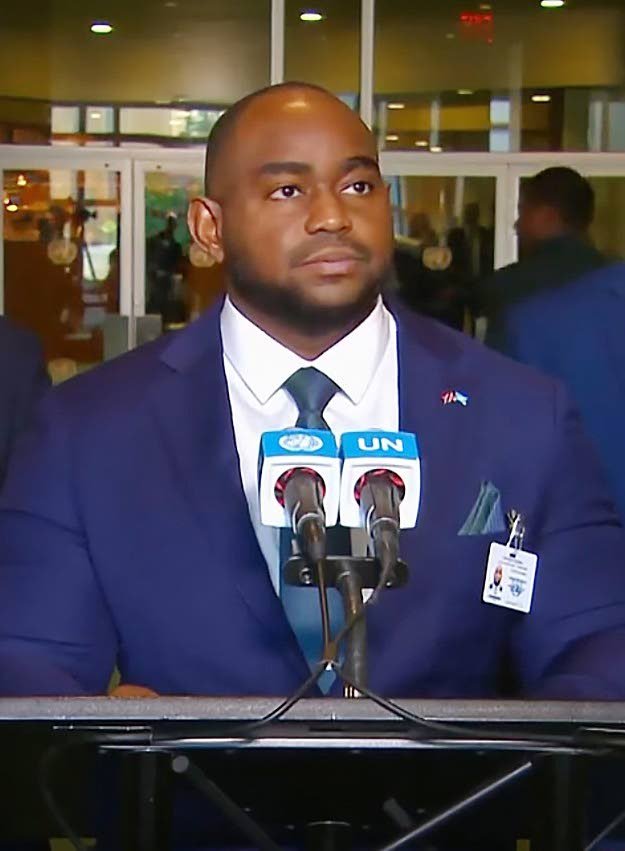
Foreign and Caricom Affairs Minister Sean Sobers says Trinidad and Tobago’s successful election to a non-permanent seat on the United Nations Security Council demonstrates the strength of the country’s relationship with Caricom, despite recent diplomatic disagreements over its governance and the reappointment of Secretary General Dr Carla Barnett.
Speaking with Guardian Media following Wednesday’s election at the United Nations General Assembly, Sobers said the overwhelming support received from Caricom member states underscored the Government’s continued commitment to the regional integration movement.
Trinidad and Tobago secured 181 votes, comfortably surpassing the required two-thirds majority of UN member states. Having run unopposed for the sole seat allocated to the Latin American and Caribbean Group (GRULAC), the country will begin its term on January 1, 2027.
The election came months after tensions emerged between Port-of-Spain and the Caricom leadership over the process used to reappoint Dr Barnett to a second term. However, Sobers maintained that the Government has never wavered in its support for the regional body.
“We have never, and the Government has never indicated anything otherwise. We have always maintained that, one, we will never leave Caricom and, two, that there needs to be some changes in terms of the mechanisms and the running of the Secretariat in terms of it being a little more efficient and effective in terms of carrying out its mandate, which will redound to all in the region. That has always been our position,” Sobers said.
The minister reiterated that T&T’s election to the Security Council will strengthen the country’s voice on major international issues while elevating its standing within the global community.
Questions remain, however, about the Government’s concerns regarding Dr Barnett’s re-election.
Pressed on what position T&T will take when Barnett’s current term expires in August, Sobers reiterated calls for improvements within the regional institution.
“Our position remains the same. We would like to see a more effective and efficient Caricom and we will try our best to ensure that is something that is realised within the not-too-distant future,” he said.
Asked whether he was calling for a fresh election for the post of Secretary General, Sobers replied: “When that time comes, when we reach that bridge, we will cross it.”
The Government’s concerns over Barnett’s reappointment first surfaced in March, when it formally wrote to Caricom Chairman and Prime Minister of St Kitts and Nevis, Terrance Drew, objecting to the process that led to her second term. Prime Minister Kamla Persad-Bissessar took umbrage at the election taking place on a boat ride to Nevis, during a retreat for the Caricom leaders, which took place after she had departed that country.
In correspondence dated March 25, Sobers stated that T&T was neither included in discussions nor afforded an opportunity to participate in deliberations regarding Barnett’s reappointment. The Government argued that the matter was not placed on the provisional agenda for the 50th Regular Meeting of the Conference of Heads of Government and was not discussed during plenary sessions.
According to Sobers, discussions reportedly took place during a retreat of Heads of Government on February 26 in Nevis, from which T&T, along with several other member states, was excluded.