Thursday, June 4, 2026
    The GeoStrategic Consensus
    No Result
    View All Result
    • Login
    • HOME
    • AMERICAS
      • Argentina
      • Brazil
      • Canada
      • Chile
      • Colombia
      • Costa Rica
      • Cuba
      • Dominican Republic
      • Ecuador
      • El Salvador
      • Greenland
      • Guatemala
      • Honduras
      • Mexico
      • Nicaragua
      • Panama
      • Paraguay
      • Peru
      • United States
      • Uruguay
      • Venezuela
    • ASIA-PACIFIC
      • Australia
      • Brunei Darussalam
      • Cambodia
      • China
      • Federated States of Micronesia
      • Fiji
      • Indonesia
      • Japan
      • Kiribati
      • Laos
      • Malaysia
      • Marshall Islands
      • Mongolia
      • Myanmar
      • Nauru
      • New Zealand
      • North Korea
      • Palau
      • Papua New Guinea
      • Philippines
      • Samoa
      • Singapore
      • Solomon Islands
      • South Korea
      • Taiwan
      • Thailand
      • Timor-Leste
      • Tonga
      • Tuvalu
      • Vanuatu
      • Vietnam
    • CARICOM
      • CARICOM – Non-English
        • Haiti
        • Suriname
      • CARICOM Associates
        • Anguilla
        • Bermuda
        • British-Virgin-Islands
        • Cayman-Islands
        • Curacao
        • Turks-and-Caicos
      • CARICOM English
        • Antigua and Barbuda
        • Barbados
        • Belize
        • Dominica
        • Grenada
        • Guyana
        • Jamaica
        • Montserrat
        • Saint Kitts and Nevis
        • Saint Lucia
        • Saint Vincent and the Grenadines
        • The Bahamas
        • Trinidad and Tobago
    • EURASIA
      • Armenia
      • Azerbaijan
      • Balarus
      • Georgia
      • Kazakhstan
      • Kyrgyzstan
      • Moldova
      • Russia
      • Tajikistan
      • Turkmenistan
      • Ukraine
      • Uzbekistan
    • EUROPE
      • Albania
      • Andorra
      • Austria
      • Bosnia and Herzegovina
      • Bulgaria
      • Croatia
      • Cyprus
      • Czech Republic
      • Denmark
      • Estonia
      • Finland
      • France
      • Germany
      • Greece
      • Holy See
      • Hungary
      • Iceland
      • Ireland
      • Italy
      • Kosovo
      • Latvia
      • Liechtenstein
      • Lithuania
      • Luxembourg
      • Malta
      • Monaco
      • Montenegro
      • Netherlands
      • North Macedonia
      • Norway
      • Poland
      • Portugal
      • Romania
      • San Marino
      • Serbia
      • Slovakia
      • Slovenia
      • Spain
      • Sweden
      • Switzerland
      • United Kingdom
    • MIDDLE EAST AND NORTH AFRICA
      • Algeria
      • Bahrain
      • Egypt
      • Iran
      • Iraq
      • Israel
      • Jordan
      • Kuwait
      • Lebanon
      • Lybia
      • Morocco
      • Oman
      • Palestinian Territories
      • Qatar
      • Saudi Arabia
      • Syria
      • Tunisia
      • Turkey
      • United Arab Emirates
      • Western Sahara
      • Yemen
    • SOUTH ASIA
      • Afghanistan
      • Bangladesh
      • Bhutan
      • India
      • Maldives
      • Nepal
      • Pakistan
      • Sri Lanka
    • SUB-SAHARAN AFRICA
      • Angola
      • Benin
      • Botswana
      • Burkina Faso
      • Burundi
      • Cabo Verde
      • Cameroon
      • Central African Republic
      • Chad
      • Comoros
      • Cote d’Ivoire
      • Democratic Republic of the Congo
      • Djibouti
      • Equatorial Guinea
      • Eritrea
      • Eswatini
      • Ethiopia
      • Gabon
      • Gambia
      • Ghana
      • Guinea
      • Guinea Bissau
      • Kenya
      • Lesotho
      • Liberia
      • Madagascar
      • Malawi
      • Mali
      • Mauritania
      • Mauritius
      • Mozambique
      • Namibia
      • Niger
      • Nigeria
      • Republic of the Congo
      • Rwanda
      • Sao Tome and Principe
      • Senegal
      • Seychelles
      • Sierra Leone
      • Somalia
      • South Africa
      • South Sudan
      • Sudan
      • Tanzania
      • Togo
      • Uganda
      • Zambia
      • Zimbabwe
    • HOME
    • AMERICAS
      • Argentina
      • Brazil
      • Canada
      • Chile
      • Colombia
      • Costa Rica
      • Cuba
      • Dominican Republic
      • Ecuador
      • El Salvador
      • Greenland
      • Guatemala
      • Honduras
      • Mexico
      • Nicaragua
      • Panama
      • Paraguay
      • Peru
      • United States
      • Uruguay
      • Venezuela
    • ASIA-PACIFIC
      • Australia
      • Brunei Darussalam
      • Cambodia
      • China
      • Federated States of Micronesia
      • Fiji
      • Indonesia
      • Japan
      • Kiribati
      • Laos
      • Malaysia
      • Marshall Islands
      • Mongolia
      • Myanmar
      • Nauru
      • New Zealand
      • North Korea
      • Palau
      • Papua New Guinea
      • Philippines
      • Samoa
      • Singapore
      • Solomon Islands
      • South Korea
      • Taiwan
      • Thailand
      • Timor-Leste
      • Tonga
      • Tuvalu
      • Vanuatu
      • Vietnam
    • CARICOM
      • CARICOM – Non-English
        • Haiti
        • Suriname
      • CARICOM Associates
        • Anguilla
        • Bermuda
        • British-Virgin-Islands
        • Cayman-Islands
        • Curacao
        • Turks-and-Caicos
      • CARICOM English
        • Antigua and Barbuda
        • Barbados
        • Belize
        • Dominica
        • Grenada
        • Guyana
        • Jamaica
        • Montserrat
        • Saint Kitts and Nevis
        • Saint Lucia
        • Saint Vincent and the Grenadines
        • The Bahamas
        • Trinidad and Tobago
    • EURASIA
      • Armenia
      • Azerbaijan
      • Balarus
      • Georgia
      • Kazakhstan
      • Kyrgyzstan
      • Moldova
      • Russia
      • Tajikistan
      • Turkmenistan
      • Ukraine
      • Uzbekistan
    • EUROPE
      • Albania
      • Andorra
      • Austria
      • Bosnia and Herzegovina
      • Bulgaria
      • Croatia
      • Cyprus
      • Czech Republic
      • Denmark
      • Estonia
      • Finland
      • France
      • Germany
      • Greece
      • Holy See
      • Hungary
      • Iceland
      • Ireland
      • Italy
      • Kosovo
      • Latvia
      • Liechtenstein
      • Lithuania
      • Luxembourg
      • Malta
      • Monaco
      • Montenegro
      • Netherlands
      • North Macedonia
      • Norway
      • Poland
      • Portugal
      • Romania
      • San Marino
      • Serbia
      • Slovakia
      • Slovenia
      • Spain
      • Sweden
      • Switzerland
      • United Kingdom
    • MIDDLE EAST AND NORTH AFRICA
      • Algeria
      • Bahrain
      • Egypt
      • Iran
      • Iraq
      • Israel
      • Jordan
      • Kuwait
      • Lebanon
      • Lybia
      • Morocco
      • Oman
      • Palestinian Territories
      • Qatar
      • Saudi Arabia
      • Syria
      • Tunisia
      • Turkey
      • United Arab Emirates
      • Western Sahara
      • Yemen
    • SOUTH ASIA
      • Afghanistan
      • Bangladesh
      • Bhutan
      • India
      • Maldives
      • Nepal
      • Pakistan
      • Sri Lanka
    • SUB-SAHARAN AFRICA
      • Angola
      • Benin
      • Botswana
      • Burkina Faso
      • Burundi
      • Cabo Verde
      • Cameroon
      • Central African Republic
      • Chad
      • Comoros
      • Cote d’Ivoire
      • Democratic Republic of the Congo
      • Djibouti
      • Equatorial Guinea
      • Eritrea
      • Eswatini
      • Ethiopia
      • Gabon
      • Gambia
      • Ghana
      • Guinea
      • Guinea Bissau
      • Kenya
      • Lesotho
      • Liberia
      • Madagascar
      • Malawi
      • Mali
      • Mauritania
      • Mauritius
      • Mozambique
      • Namibia
      • Niger
      • Nigeria
      • Republic of the Congo
      • Rwanda
      • Sao Tome and Principe
      • Senegal
      • Seychelles
      • Sierra Leone
      • Somalia
      • South Africa
      • South Sudan
      • Sudan
      • Tanzania
      • Togo
      • Uganda
      • Zambia
      • Zimbabwe
    No Result
    View All Result
    Agentially
    No Result
    View All Result
    Home ASIA-PACIFIC Singapore

    Indonesia’s ‘grey-area’ graft cases divide the public

    The Analyst by The Analyst
    June 4, 2026
    in Singapore
    Indonesia’s ‘grey-area’ graft cases divide the public


    JAKARTA – Corruption eradication has long been seen as Indonesia’s holy grail – the one breakthrough that, if achieved, could unlock the country’s potential and usher in a new golden era.

    READ ALSO

    Move to dissolve Johor assembly signals BN confidence in retaining supermajority: Analysts

    Nvidia’s AI chips sought by Chinese labs with ties to military

    Yet, in recent months, it would seem that public opinion has frequently sided with those accused of corruption – a surprising twist in a country where a 2021 survey once found that 96.6 per cent of respondents agreed that “big-time” corruptors should face the death penalty.

    This comes amid a growing perception that an increasing number of corruption cases seems to hinge less on clear acts of bribery or graft, and more on “grey-area” policy or business decisions.

    In many such cases, prosecutors argued that officials abused their authority or violated procurement and governance rules in ways that unlawfully benefited third parties, even when direct bribes are not alleged.

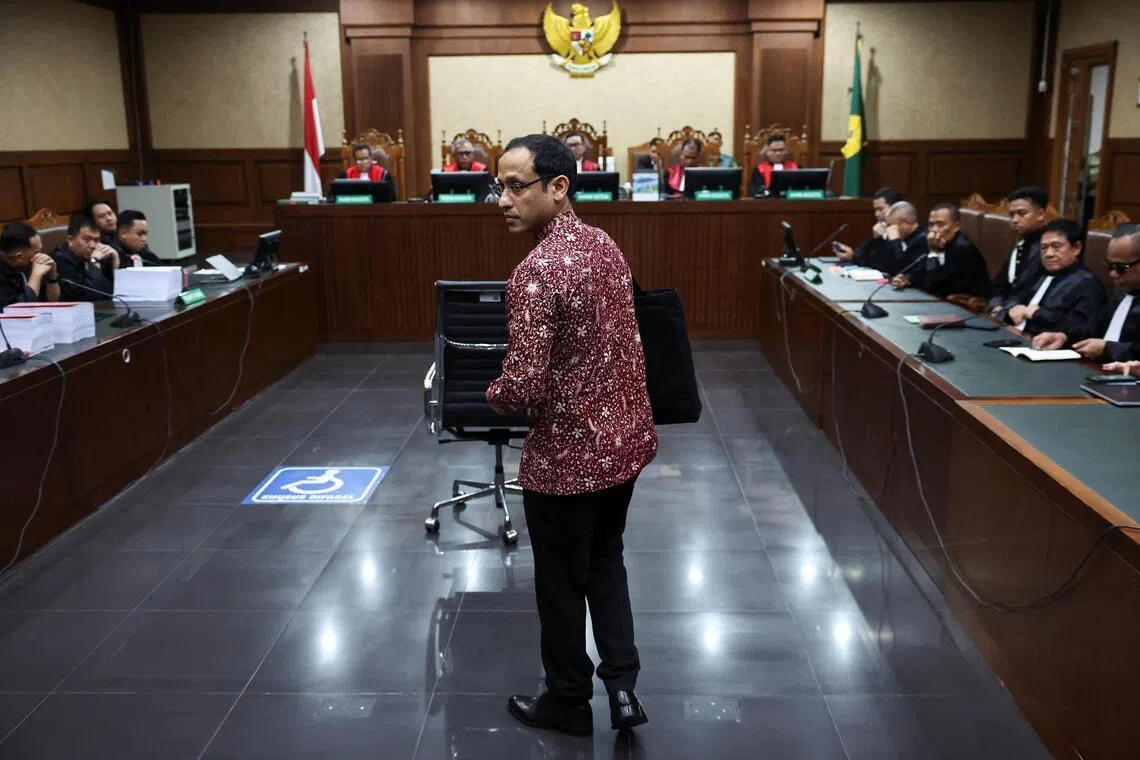
    The highest-profile example of this is the case against former education minister Nadiem Makarim. Nadiem, co-founder and former chief executive officer of ride-hailing company Gojek, has been accused of improperly influencing the procurement of Chromebook laptops in order to enrich himself during his time as a minister in 2020.

    Prosecutors said that his actions resulted in 2.18 trillion rupiah (S$156 million) in state losses and have asked the Jakarta Corruption Court to sentence him to 18 years in prison.

    Unlike many public officials accused of corruption in the past, Nadiem has not sought to keep a low profile during the trial, which started in early January.

    In fact, he has done the complete opposite: Posting regularly on his LinkedIn and Instagram accounts, creating a website to rebut the allegations against him, and freely giving interviews before and after court hearings.

    Nadiem’s social media posts have since received tens of thousands of likes and comments – most of them supportive, and many from celebrities and other public figures.

    “This is outrageous,” a comment from celebrity chef Farah Quinn on one of the posts reads. “I don’t know how a country can move forward if educated people who are genuinely trying to make a difference are not protected.”

    Of course, not everyone is as sympathetic. Iman Zanatul Haeri of the Indonesian Teachers Association, for example, has said that the Chromebook procurement was wasteful and unnecessary.

    “It wasn’t innovation; it was a policy deliberately created to sell technological devices using state funds,” he said on local podcast Jaksapedia on May 21.

    Recently, prosecutors sought an 11-year prison sentence for Nicko Widjaja, the former chief executive of BRI Ventures, a subsidiary of state-owned bank BRI, in relation to his decision to invest in agricultural start-up TaniHub from 2020.

    TaniHub met with financial difficulties in 2022, and prosecutors deemed that the investment had caused US$5 million (S$6.4 million) in state losses.

    In a letter posted on his Instagram account, Nicko said he was deeply disappointed that a business decision was treated as a criminal act.

    “There was no abuse of power, no conflict of interest, no ill intent, and everything was done with good intentions,” he wrote in the letter.

    The post has since received more than 19,000 likes and 7,000 shares as at the time of writing.

    One supportive comment on the post came from popular Indonesian stand-up comedian Pandji Pragiwicaksono: “Hang in there, bro.”

    Earlier, on May 13, former education ministry consultant Ibrahim Arief was sentenced to four years’ imprisonment and fined 500 million rupiah for his role in the Chromebook laptop procurement. The five-judge panel was split in its decision, with two judges issuing a dissenting opinion – a rare occurrence in criminal cases.

    While the case was ongoing, Ibrahim and his wife regularly posted on social media platform X. He also created a website to collect messages of support from the public.

    One message read: “Ibam, you don’t know how many people are infuriated by this, and we are standing with you.”

    And before that, at the end of March, freelance videographer Amsal Sitepu was accused of “marking up” his services to a number of villages in North Sumatra, despite the village heads agreeing to his pricing beforehand. He was eventually found not guilty after his case went viral on social media.

    What seems to link these cases together is a different approach to how law enforcement agencies build corruption cases – and consequently, how they are viewed by the public.

    Public support, however, does not necessarily indicate innocence, and several of the defendants highlighted in these cases have already been convicted.

    In the past, such cases, usually handled by the Corruption Eradication Commission (KPK), were closely associated with “operasi tangkap tangan”, or sting raids, where public officials were caught in the act of asking for or receiving bribes, followed by a parade of confiscated cash and luxury goods that officers alleged were part of the accused’s ill-gotten gains.

    None of these hallmarks was present in the aforementioned cases, which experts say plays a large role in how the public perceives them.

    “The public has its own sense of justice, which may not necessarily align with the justice sought by law enforcement,” Gadjah Mada University Center for Anticorruption Studies researcher Zaenur Rohman told The Straits Times.

    “So, the public assesses whether, in a particular case, the defendant has enjoyed the proceeds of the crime, or whether other parties are benefiting unlawfully,” he said.

    Zaenur declined to comment on specific cases, but said he has observed a broader trend in recent corruption prosecutions.

    “It is like they see that if there is a violation of the rules that results in state losses, it is automatically corruption,” he said. “But this isn’t necessarily true. It could be corruption, maladministration or even simply a business risk, especially if the accused works for a state-owned or regionally-owned enterprise.”

    Transparency International Indonesia secretary-general Danang Widoyoko said the trend of cases goes even further back to 2025, with the corruption cases against former trade minister Thomas Lembong and former state-owned ferry operator PT ASDP Indonesia Ferry director Ira Puspadewi drawing significant public sympathy. Thomas and Ira were both found guilty, but were later pardoned by President Prabowo Subianto.

    Danang said that under Indonesian law, three elements must be met for an act to constitute the crime of corruption: It must be unlawful, enrich oneself or another party, and result in state losses.

    Underpinning all of this, “mens rea, or malicious intent, must be proven”, he told ST. “In these cases, law enforcement has it reversed. They focus on the state loss first, and fill in everything afterwards.”

    As a result, fewer corruption prosecutions focus on bribery involving public officials because, as Danang put it: “There are technically no state losses in bribery cases.”

    Danang suggested that the shift partly reflects a change in how the Attorney-General’s Office (AGO) measures its own performance, saying that prosecutors are now incentivised to recover money for the state – a priority that has taken on added urgency as the government grapples with a tight fiscal outlook.

    “The AGO’s key performance indicator is how much money it collects for the state,” he said. “So prosecutors are racing to find cases where they can claim state losses and seize assets.”

    Prosecutors, however, argue that asset recovery is a core part of corruption eradication.

    “Justice will only be complete when the assets are confiscated, and we don’t want to simply pursue prosecutions without considering how those assets will be recovered,” Attorney-General ST Burhanuddin said at an event on May 21.

    The AGO even set up a new Asset Recovery Agency in February 2024. In 2024, the agency recovered 1.3 trillion rupiah – 211 billion rupiah of that from damages collected from prosecutions. In 2025, that number ballooned to 19.7 trillion rupiah, of which 18.7 trillion rupiah was derived from prosecutions.

    But both experts warned that the approach risks backfiring.

    Danang said the trend is creating legal uncertainty for businesses and investors, who cannot be sure that a policy decision or commercial loss will not later be reframed as corruption.

    And for the public, it breeds distrust. Even in cases where there might be legitimate suspicion that corruption has occurred, people will start questioning what the real motive (behind the prosecution) is, he said.




    Source link

    Related Posts

    Move to dissolve Johor assembly signals BN confidence in retaining supermajority: Analysts
    Singapore

    Move to dissolve Johor assembly signals BN confidence in retaining supermajority: Analysts

    June 4, 2026
    Nvidia’s AI chips sought by Chinese labs with ties to military
    Singapore

    Nvidia’s AI chips sought by Chinese labs with ties to military

    June 4, 2026
    Asia
    Singapore

    Asia

    June 4, 2026
    $9m pilot initiative to integrate palliative care into chronic kidney disease treatment
    Singapore

    $9m pilot initiative to integrate palliative care into chronic kidney disease treatment

    June 4, 2026
    Singapore
    Singapore

    Singapore

    June 4, 2026
    Next Post

    Angara leads oath-taking of nearly 1,000 promoted Caraga educators

    POPULAR NEWS

    Switzerland to follow EU on migrant return centres abroad

    Switzerland to follow EU on migrant return centres abroad

    June 4, 2026

    Greenland PM says Danish election most important in history

    June 4, 2026
    EKRE leader downplays poll slump, targets strong showing ahead of Estonia vote | News

    EKRE leader downplays poll slump, targets strong showing ahead of Estonia vote | News

    June 4, 2026
    Who pays when a drone threat keeps you from getting to work? | Yle News

    Who pays when a drone threat keeps you from getting to work? | Yle News

    June 4, 2026
    The best beauty products right now according to Natalie

    The best beauty products right now according to Natalie

    June 4, 2026

    EDITOR'S PICK

    The intimacy of the Argentine National Team in the World Cup was leaked: who each player sleeps with and why Messi is alone

    The intimacy of the Argentine National Team in the World Cup was leaked: who each player sleeps with and why Messi is alone

    June 4, 2026
    Meet the Japanese mayor seeking to normalize maternity leave in public office

    Meet the Japanese mayor seeking to normalize maternity leave in public office

    June 4, 2026
    Iran stops talking to mediators – Iranian reports

    Iran stops talking to mediators – Iranian reports

    June 4, 2026
    Lorik Cana supports the cause for the protection of Zvrnec: Nature, culture and heritage are for the future

    Lorik Cana supports the cause for the protection of Zvrnec: Nature, culture and heritage are for the future

    June 4, 2026

    Recent Posts

    • Switzerland to follow EU on migrant return centres abroad
    • Greenland PM says Danish election most important in history
    • EKRE leader downplays poll slump, targets strong showing ahead of Estonia vote | News
    • Who pays when a drone threat keeps you from getting to work? | Yle News

      © 2026 Agentially - Navigating shifting sovereignties and global risk .

      Welcome Back!

      Login to your account below

      Forgotten Password?

      Retrieve your password

      Please enter your username or email address to reset your password.

      Log In
      No Result
      View All Result

        © 2026 Agentially - Navigating shifting sovereignties and global risk .

        This website uses cookies. By continuing to use this website you are giving consent to cookies being used. Visit our Privacy and Cookie Policy.