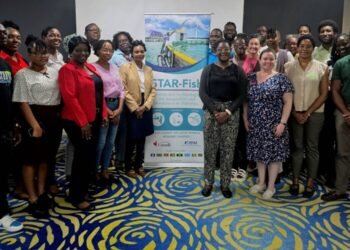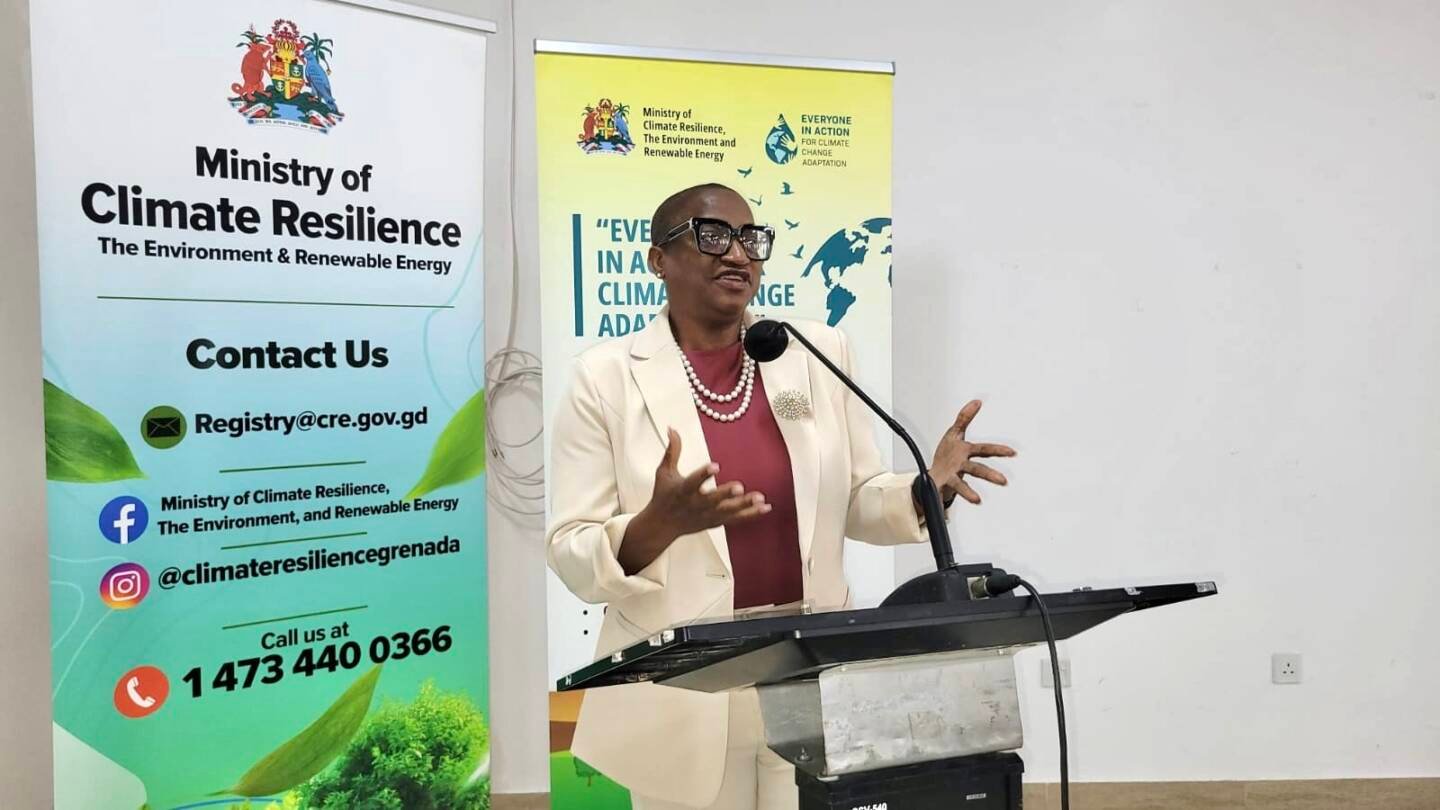
The Ministry of Climate Resilience, the Environment and Renewable Energy has taken another significant step in advancing Grenada’s climate resilience agenda with the successful hosting of a validation workshop for the Citizen’s Guide to Climate Change Adaptation for Grenada, Carriacou and Petite Martinique, which was held at the Kirani James Athletic Stadium, St George, on 1 June 2026.
The workshop brought together representatives from government ministries and agencies, civil society organisations, community groups, academia, youth representatives, and development partners to review and validate the revised draft of the guide prior to its finalisation and public release. The validation workshop forms part of the ministry’s broader efforts to strengthen public awareness, participation, and ownership of climate adaptation actions under the country’s revised National Adaptation Plan (NAP) 2025–2030.
The workshop built upon the outcomes of a Focus Group Session held on 27 April 2026, where stakeholders conducted a detailed review of the guide’s zero draft and provided recommendations to improve its structure, accessibility, clarity, relevance, and practical application. The revised version presented during the validation workshop incorporated these recommendations, including simplified language, stronger links to national adaptation priorities, practical examples of adaptation measures, and enhanced visual and public-friendly content.
Delivering opening remarks, Permanent Secretary Peron Johnson underscored the importance of making climate policy accessible to all citizens. “The National Adaptation Plan is a critical national framework for building resilience across all sectors of our economy and society. However, policy documents can often be highly technical. The Citizen’s Guide is intended to bridge that gap by translating complex adaptation concepts into information that households, communities, schools, businesses, civil society organisations, and citizens can understand, relate to, and act upon.”
Johnson further emphasised that climate adaptation is not solely a government responsibility but a national undertaking requiring informed and active participation from all segments of society. “Climate resilience will only be achieved when adaptation becomes everyone’s business. This Guide is designed to empower citizens with the knowledge needed to understand climate risks, identify opportunities for action, and contribute meaningfully to building a more resilient Grenada, Carriacou and Petite Martinique.”
National Adaptation Plan Officer Dr Roxanne Graham-Victor highlighted the importance of stakeholder engagement throughout the development process and noted that the validation exercise was essential to ensuring that the final document remains practical, relevant, and responsive to the needs of its intended audience. “The objective of this process is to ensure that the Guide is clear, practical, accessible, and useful to the people it is intended to serve. Stakeholder feedback remains central to achieving that objective.”
Acting Director of Climate Resilience Titus Antoine emphasised that the guide represents a key tool for supporting the implementation of the National Adaptation Plan and strengthening public engagement in climate action.
The ministry expressed its sincere appreciation to all participants for their valuable contributions and continued commitment to advancing Grenada’s climate resilience agenda. Special recognition was also extended to the National Adaptation Plan Global Network and the International Institute for Sustainable Development (IISD) for their ongoing technical and financial support in strengthening Grenada’s adaptation planning processes and facilitating the development of the Citizen’s Guide.
Following the workshop, the document will undergo final revisions to incorporate stakeholder recommendations. The finalised guide will then be produced and disseminated nationally as a key public resource to support climate adaptation awareness, education, and action throughout Grenada, Carriacou and Petite Martinique.
Ministry of Climate Resilience, the Environment and Renewable Energy