Loading Text-to-Speech…
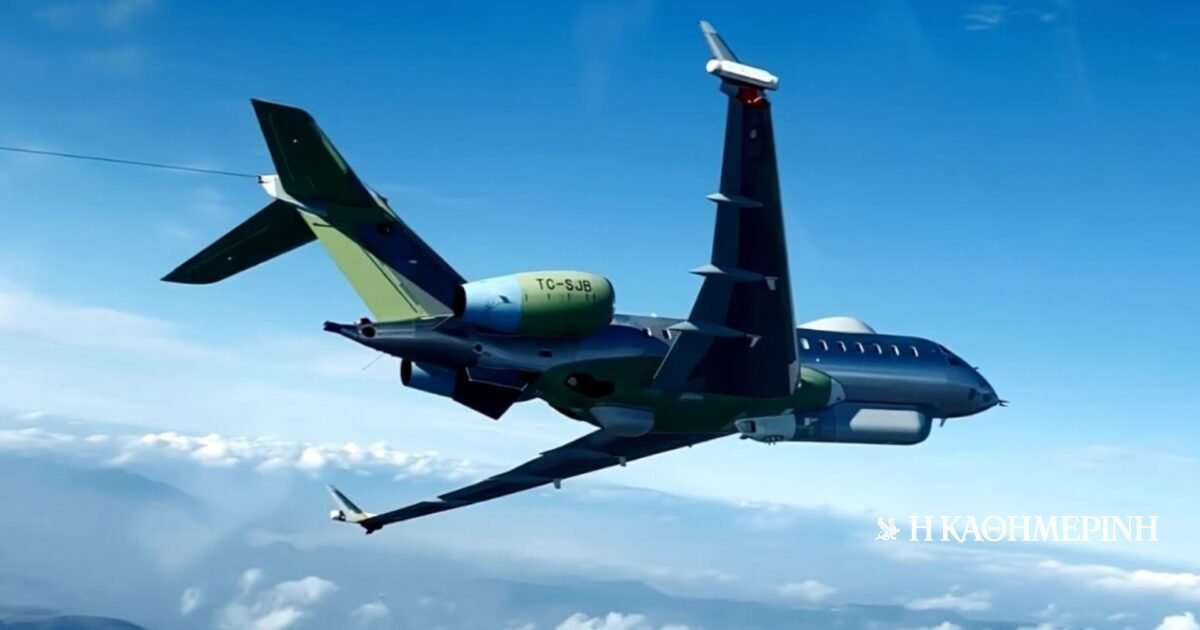
Its domestic electronic warfare aircraft development program is entering its maturation phase Turkeyknown as Hava SOJ (Standoff Jamming). The platform based on the twin engine jet Global-6000 her Bombardier appears for the first time in a Turkish video Ministry of Defense which was posted on Platform X on the occasion of the events for the 115th anniversary of the establishment of the Turkish Air Force.
The Hava SOJ began flight tests in early 2026, and despite a three-year delay in the program – the first aircraft was to be delivered in 2023 –, Turkish officials say it is expected to enter service as early as 2027. The contract with the Turkish company Aselsanwhich designed and develops the new platform, foresees the acquisition of four aircraft, while interest in the Turkish airborne electronic warfare system has already been expressed by Pakistan and the Saudi Arabia.
115 years of Türk milletinin skışındeki sarsılmaz güçü, Gök Vatan’ın yılmaz bekçisiyiz! 🇹🇷✈️
Are you celebrating the 115th anniversary of the founding of Hava Kuvvetleri Komutanlığımızın, the pride of our nation with its glorious history, outstanding dedication and heroic personnel? at the beginning of the task… pic.twitter.com/ktxuhgy2jk
— TC Millî Savunma Bakanlığı (@tcsavunma) June 1, 2026
Electronic warfare
According to Aselsan, the Hava SOJ is an integrated electronic warfare platform of great strategic value. Besides, aircraft with similar capabilities are used by the United States, Australia and the United Kingdom, Russia and China. His dispatch folder Hava SOJ involves “blinding” enemy air defense radars by emitting electronic jamming and creating “corridors” so that friendly air forces to penetrate areas with dense air defense networks. According to its manufacturer, the Hava SOJ it will have the ability to paralyze the enemy’s communications through noise emissions and also misleading interference with the aim of disrupting the “cycle” of command and control.
According to the technical characteristics of the platform, the Hava SOJ it will operate from safe distances, staying away from the enemy’s anti-aircraft fire, while it will also have a self-protection system for infiltrating a business environment. The aircraft it will also function as an intelligence gathering and surveillance platformwhile cages on its fuselage testify to the presence of ground radar, electronic scanning sensors (AESA) and an electronic countermeasures system. According to reports, the architecture of the Hava SOJ will be based on the advanced ground-based electronic warfare systems of the Aselsan, Koral and Kara SOJ which are used to detect and track enemy radars and to jam and mislead them respectively.
Race
The inclusion of the Hava SOJ system in service will give Turkey a significant advantage in the area of early warning, intelligence gathering and the conduct of complex air operations, capabilities that, together with the development of cruise munitions and ballistic missiles, are of concern not only to Athens, but also to Jerusalem.
Greece, with the current defense arrangement, maintains supremacy in the Aegean as it has modern fighter aircraft capable of network-centric operations (F-16 Viper and Rafale) and in about three years will receive the first F-35. However, the lessons learned from modern fields of operations in Ukraine and the Middle East as well as India’s recent conflict with Pakistan demonstrate the great strategic value of airborne radar and electronic warfare systems.
The Air Force has had the Airborne Early Warning and Control System (ASEPE) since 2008, which is a valuable tool for the Greek Armed Forces. However, the four aircraft EMB-145H of the program faced significant problems in their availability as from 2021 they do not have a technical contract for ongoing support, while the mission system has not been upgraded since their receipt.
“K” is informed that in recent months a significant effort is being made to “unfreeze” the contract that will secure spare parts for the aircraft and their radar, with the Greek side continuing consultations with the Swedish manufacturers. Last February he arrived at GDAEE the draft FOS (Follow On Support) amounting to approximately 83 million euros and once the negotiations are completed, the contract will receive the approval of the equipment committee of the Parliament and KYSEA to start its implementation.