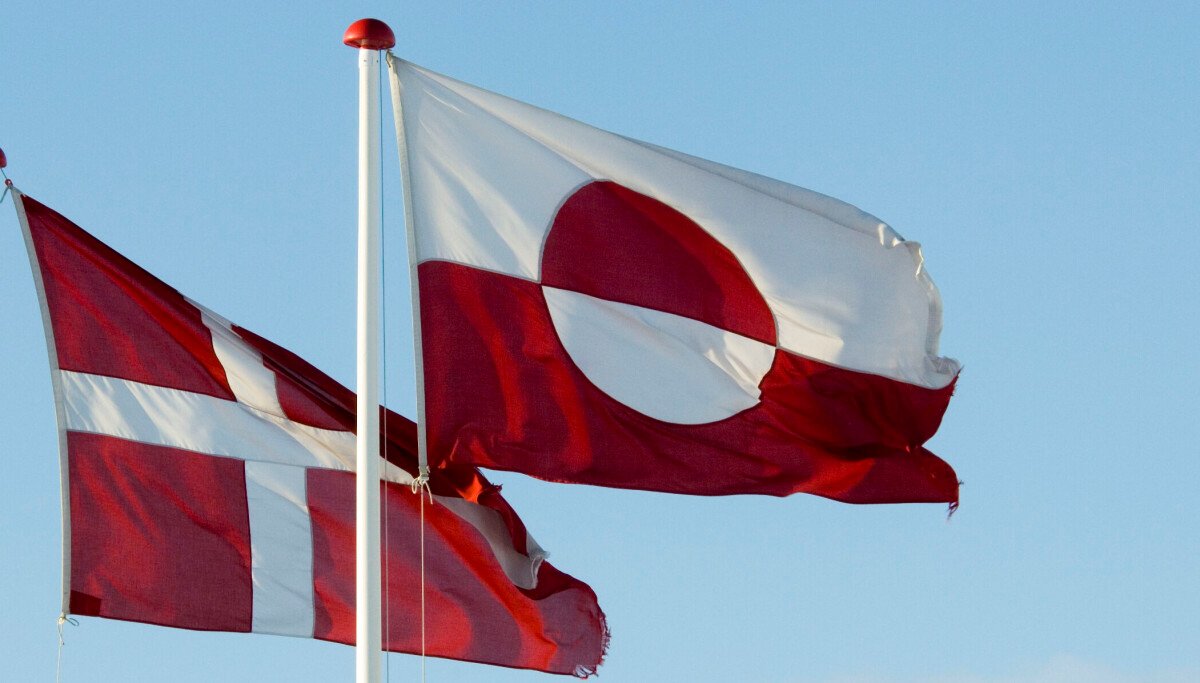
The debate about the relationship between Greenland and Denmark flares up regularly.
When the total Danish contribution of DKK 5.5 billion to block grants, defense and police is mentioned, it sounds like a staggering statement.
The debate about the relationship between Greenland and Denmark flares up regularly.
When the total Danish contribution of DKK 5.5 billion to block grants, defense and police is mentioned, it sounds like a staggering statement.
But if we spread it out among the individual Danish families, the bill comes to around DKK 160 per month, the price of two cups of café latte and a piece of cake in Copenhagen.
For the coffee money, Denmark has historically secured access to enormous values. But despite centuries of political cohesion, we humans have never really understood each other. It’s time for a deep search.
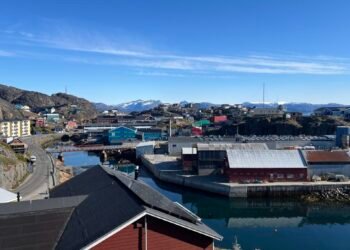
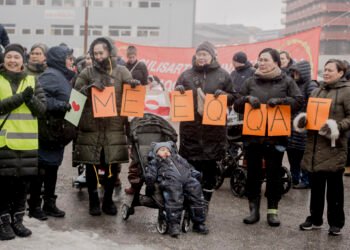
The Greenlandic people have a special, legitimate right to this land. Not because of abstract legal constructions, but because we live here, live here and create an everyday life along the entire coast, from Siorapaluk to Ittoqqortoormiit. Hunting opportunities, home and family create the sense of belonging that gives us an indisputable right over the country’s future.
The raw reality of geography
Our challenges cannot be understood through theories of small, open market economies. Greenland is shaped by enormous distances, climate and isolation.
Settling in the Arctic is not the result of market forces, but a political choice. If Greenland is to be a modern society, it requires continuous, structural redistribution, regardless of which flag is flying over the country.
Our scattered population is often called an economic weakness. But it is our greatest geopolitical strength: it is the living population that claims and secures the territory. If we hadn’t lived here, the great powers would have taken over long ago.
Who owns the value?
Historically, our riches, including cryolite and a staggering 11 million tonnes of cod, were exploited from outside. In the 1930s, Greenland was a poor country without electricity or cars, and the population only reached 20,000 in 1950.
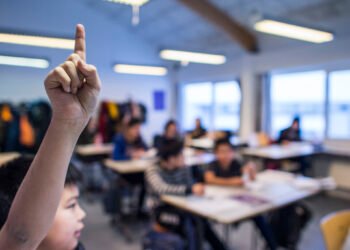
While the University of Copenhagen has trained specialists since the 15th century, Greenlanders only really gained access to higher education after 1954.
In comparison, Mahatma Gandhi became a lawyer in the 1890s, and an African became a doctor from a university in Scotland in the 1870s.
Without a critical mass of our own economists, lawyers and engineers, we were excluded from managing the resources. We did the hard work of catching the fish, but everything that really created the big capital was outside Greenland.
It was the ships, the diesel oil, the ports, the shipyards, the banks, the credits, the insurances, the packaging and the export link itself that controlled the flow of money.
Education level determines whether you own the resource or whether you just pull it out of the water.
The exploitation of the Greenland raw material boom generated, according to a conservative estimate, several thousand billion kroner in socio-economic gain for Denmark and the rest of the Nordic region, which greased the wheels during the great post-war welfare boom.
The road to a new community
Today, Greenland makes a massive return contribution in the form of Arctic sovereignty, global superpower status and a priceless stake in the future’s strategic shipping routes and critical minerals.
As Member of Parliament Naaja Nathanielsen has aired, it is time to renew the community, so that Greenland is recognized as an active, contributing partner, not a passive expense for the Danish treasury.
The Self-Government Act is outdated, and perhaps even in violation of UN human rights. Instead, we should look to Switzerland and reconstruct the commonwealth as a true federal confederation, each with its own constitution and full, real equality.
Only through such true equality can we understand each other as partners and continue together, for decades to come, and perhaps always.