Israel and Lebanon announced this Thursday (16) a ten-day ceasefire. The truce was first announced by Donald Trump, President of the United States, after speaking by telephone with his Lebanese counterpart, Joseph Aoun, who thanked him for his efforts to “ensure lasting peace and stability” in the region.
Shortly after the ceasefire came into force, however, in the early hours of Friday (17) local time, the Lebanese Army stated that Israel had violated the ceasefire with shots targeting villages in the south of the Arab country. Hezbollah said it attacked Israeli soldiers in reprisal; Tel Aviv did not comment.
The American president stated that he also had conversations with the prime minister Binyamin Netanyahu and that “these two leaders agreed that to achieve peace between their countries” they would formally begin a ten-day ceasefire. The truce came into force at midnight on Friday (17) Lebanese time (6pm this Thursday in Brasília).
“I have instructed Vice President JD Vance and Secretary of State Marco Rubio, along with Chairman of the Joint Chiefs of Staff Dan Caine, to work with Israel and Lebanon to achieve lasting peace,” Trump said.
The conversation between Trump and Aoun took place after the Lebanese rejected a US request for a “direct call” with Netanyahu, according to a Lebanese official aware of the negotiations.
After talking about the truce, the American added that he had invited Aoun and Netanyahu to a meeting at the White House. “Both sides want to see peace, and I believe that will happen quickly,” he said. According to him, the meeting could take place in the next few days.
Netanyahu confirmed his endorsement of the truce and stated that he has “the opportunity to make a historic agreement with Lebanon.” He repeated that the main demand “is that Hezbollah be dismantled.”
Trump stated that the agreement includes the extremist group, but the Israeli declared that his country “did not agree to Hezbollah’s demand to withdraw from southern Lebanon and return to the international border.”
Israeli security officials interviewed by the Reuters news agency also stated that the Israeli Army has no plans to withdraw its troops from southern Lebanon. “We will remain in Lebanon with an extensive security zone up to the border with Syria,” Netanyahu said.
Minutes before the ceasefire, Israeli forces reported hitting 380 Hezbollah targets in Lebanon, including launchers and military bases, in 24 hours. They added that they were on “maximum defense alert” and that they would operate in accordance with Israeli government guidelines. In Lebanon, there were celebratory shots fired into the air as soon as the truce came into force, according to The New York Times.
Abrahim al-Moussawi, a Hezbollah deputy, told the AFP agency that the group would respect the ceasefire if Israeli attacks against the militants stopped. “We in Hezbollah will cautiously adhere to the ceasefire on the condition that there is a complete cessation of hostilities against us,” he said.
Speaker of the Lebanese Parliament and Hezbollah ally Nabih Berri wrote in a statement that the presence of Israeli troops in Lebanon grants the people “the right to resist” and that the truce should not allow Tel Aviv freedom of movement within the country’s territory. He further urged people to “postpone their return to their cities and villages until the situation becomes clearer.”
Lebanon’s Prime Minister, Nawaf Salam, stated that he “welcomes” the truce announcement. The president of the European Commission, Ursula von der Leyen, also celebrated the agreement. “I welcome the ceasefire (…). This brings relief, as this conflict has already claimed too many lives,” she wrote in a post on X.
THE Hezbollah proposed on Wednesday (15) a one-week truce the Tel Aviv. The proposal, announced by Al-Mayadeen TV, linked to the group, was analyzed by Netanyahu’s office, according to members of the Israeli government.
Israel opened direct negotiations with Lebanon for the first time since 1993. On Tuesday (14) there was the first round talks, mediated by the USA, in Washington.
According to Al-Mayadeen, the truce proposed by Hezbollah was informed by the Iranian regime, which seeks to extend the term of its own ceasefire with the United States —who launched a war on the side of Israel against the Iran on February 28th. It is no coincidence that Tehran celebrated this Thursday’s agreement.
The fighting stopped last week, but the deadline given by donald trump for an agreement ends next Tuesday (21). Iran received a delegation led by Asim Munir, military chief of the Pakistan —country that hosted the first and inconclusive round of negotiations with the USA—to send a new proposal for talks with the Americans.
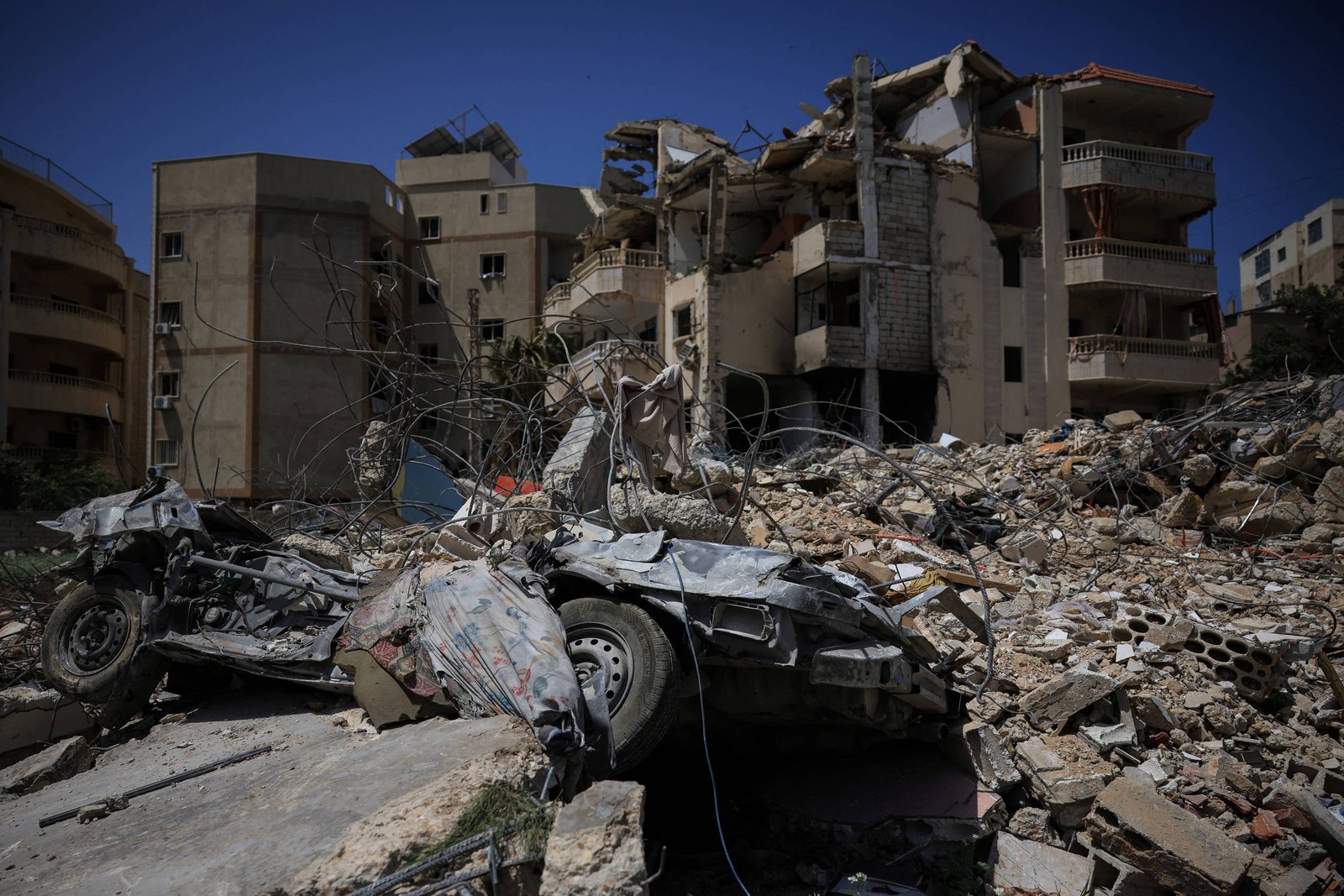
The obstacles to lasting peace, however, are evident. Also on Thursday, before the truce, the Lebanese Army stated that Israeli attacks destroyed the Qasmiyeh bridge, which passes over the Litani River, in the south of the country, and isolated the area from the rest of Lebanon. According to the statement, the actions killed one person and injured three others, including “a soldier from the unit stationed on the bridge.”
The Lebanese news agency NNA had previously reported the destruction of this infrastructure, “the last bridge between the regions of Tire and Sidon”. The Israeli Army said it ordered on Wednesday that an area of about 30 kilometers from Lebanon’s southern border to the Litani River be designated a “killing zone” for the Hezbollah group.
Another Israeli airstrike on the city of Ghazieh, in the south of the country, killed at least seven people and injured 33, according to the local Ministry of Health. Lebanese state media reported a “massacre of civilians” in the city and said rubble removal operations were underway.
Hezbollah fired rockets at cities in northern Israel. Three people were injured, and two of the victims are in serious condition, according to The Times of Israel.
Within the US, the House, with a Republican majority, blocked a resolution presented by Democrats that sought to interrupt the war in the Middle East until military offensives were authorized by Congress. The measure was defeated by 214 votes to 213, a day after a similar proposal was blocked in the Senate.