The founder of Chinese property giant Evergrande Group (恆大集團) has pleaded guilty to charges of fraud and bribery, a court said yesterday, the latest blow for what was once the country’s leading developer.
Evergrande’s rise was propelled by decades of rapid urbanization and rising living standards, but in 2020, its access to credit dramatically narrowed when the government introduced curbs on excessive borrowing and speculation. The company defaulted in 2021 after struggling to repay creditors.
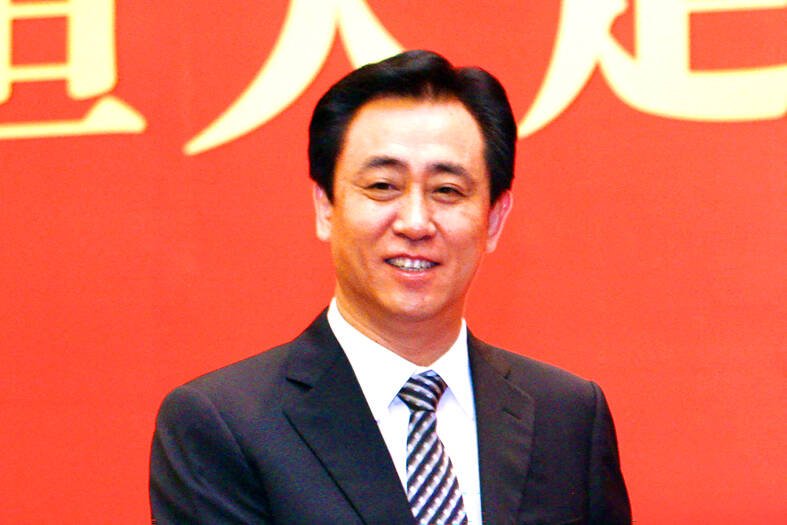
Founder Xu Jiayin (許家印), 67, known as Hui Ka Yan in Cantonese, was reportedly held by police in 2023, with Evergrande saying he had been subjected to measures “due to suspicion of illegal crimes.”
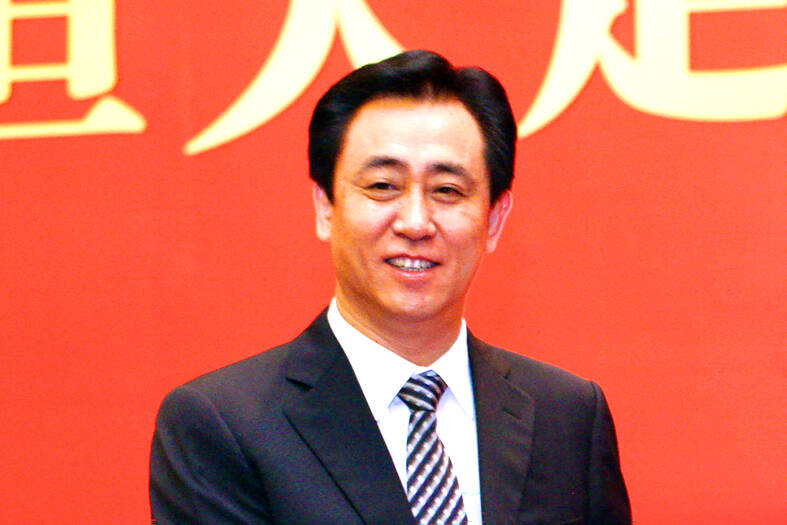
Photo: AFP
A public hearing was held on Monday and yesterday on a case against Xu for “illegally absorbing public deposits, fundraising fraud, illegally issuing loans, illegally using funds, fraudulently issuing securities, disclosing important information in violation of regulations, embezzlement and [corporate] bribery,” a court statement said.
“Xu Jiayin pleaded guilty and expressed remorse in court,” the statement from the Shenzhen Intermediate People’s Court in Guangdong Province said, without elaborating further.
Evergrande and its real-estate arm also stood trial this week. The company is accused of a list of crimes including fraud, bribery and illegally issuing loans. Its real-estate arm faces a charge of fraudulently issuing securities.
The court said it would announce a verdict at a later date.
Listed in Hong Kong in 2009, Evergrande surged to a peak market value of more than US$50 billion under Xu. The company’s fortunes reversed in 2020 under new borrowing regulations from Beijing.
A Hong Kong court issued a winding-up order in January 2024, ruling that the company had failed to come up with a suitable debt repayment plan. Evergrande delisted from the Hong Kong stock exchange in August last year.
The company’s saga — and similar issues faced by other property giants including Country Garden Holdings Co (碧桂園) and Vanke Co (萬科) — have been closely followed by observers assessing the health of the world’s second-largest economy.
The crisis has also dampened consumer sentiment as Chinese officials push for a new growth model driven more by domestic spending rather than investment.
New home prices in China have been contracting for nearly three years.