
Our health system faces great challenges, including the shortage of specialist doctors. Peru registers 17.9 doctors per 10,000 inhabitantsaccording to the National Registry of Health Personnel, a figure below the threshold of 23 recommended by the World Health Organization (WHO) and, even more so, the 35 suggested by the Organization for Economic Cooperation and Development (OECD). However, it is not enough to train doctors: The main challenge is to ensure the training of professionals with a solid, innovative and certified quality preparation, focused on the real needs of Peruvians.. And, in this scenario, universities have a key role.
With that objective, the Southern Scientific University was present at CADE Salud 2026organized by IPAE Acción Empresarial, where he highlighted his triple national and international accreditation in Human Medicine. “This is sustained work aimed at guaranteeing the training of doctors that the country needs, in response to the demands of the health system. And one way to ensure that we are on the right path is to voluntarily expose ourselves to the accreditation processes,” said Jordi Grau, Academic Vice-Rector of Health Sciences at the Scientific University of the South.
What achievements consolidate Cientifica as a reference in medical education? The academic institution was evaluated by three accrediting bodies that validated the quality of its training. Last July, he obtained the FLASIC international accreditation for its Simulation Clinics, confirming international standards of the highest level in clinical simulation methodology, patient safety and objective evaluation of clinical performance.
Added to this important milestone, in December, was the international accreditation granted by COMAEM, a Mexican organization specialized in the accreditation of Human Medicine programs, after passing a highly demanding comprehensive evaluation. And, in January of this year, this accreditation was recognized by SINEACEincorporating this achievement into the National System of Evaluation, Accreditation and Certification of Educational Quality and generating additional academic and regulatory benefits, in line with the current SUNEDU regulations.
This triple accreditation consolidates the Universidad Cientifica del Sur as an important reference in medical education, by combining international standards for its academic program, the accreditation of its training methodology in clinical simulation and official recognition within the national quality system.
Immersive technologies redefine medical training
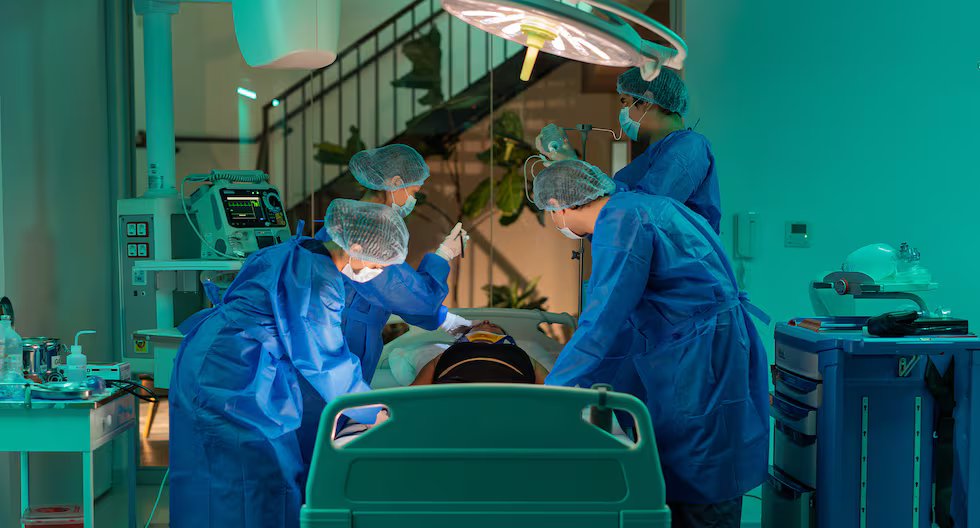
Technological innovation has been transforming medical education for the benefit of patients. In this context, the Scientific University of the South integrates immersive technologies in its Simulation Clinic and Cadaver Lab. Thus, Grau highlighted that this year they have taken a significant step taking medical simulation to the next level, integrating mixed realitya technology that allows you to recreate complex clinical scenarios, designed by medical specialists of our Human Medicine and Biomedical Engineering degree, which positions the University as a pioneer in its implementation in medical training.
Today, its curriculum integrates clinical simulation as a learning methodology in safe and controlled environments. “This becomes especially important if we look at the local context, where the resident is still trained alongside the patient. If we look at the large hospitals in the world, associated with large universities, they have a route that ensures that the patient does not suffer harm in the learning curve of the residents. In our country, they learn under supervision, but they practice directly on the patient,” said Grau.
In that sense, it put on the table a key question in medical care: are doctors in training really prepared to adequately intervene in patients? For Grau, there is no certainty. Under that premise, he maintained that Clinical simulation is crucial to reduce errors in patient care.
“We are not criticizing the Peruvian system, we are showing that there are other routes to guarantee patient safety. It is essential to integrate the academy with hospitals and clinics, promoting simulation environments where safety is the central axis. Universities with high quality standards can contribute to the implementation, training and development of simulation centers, spaces where processes are developed with the same level of demand as in real clinical practice with patients.”
Jordi Grau, Academic Vice-Rector of Health Sciences of the Scientific University of the South
Recently, the Scientific University of the South acquired and implemented the Da Vinci robotic surgery system, one of the most advanced in the world and used in the main hospitals internationally for high precision procedures in the specialties of urology, general surgery, gynecology, colorectal and thoracic surgery. This incorporation positions the Scientific University of the South as the first and only academic institution in Peru to integrate robotic surgery, structurally, into medical training.
According to Grau, surgeons no longer need to travel to Brazil or the United States to get certified and use the robot. Today, the Scientific University of the South offers it. “We are the only university in Peru that incorporates robotics simulators into its study plans so that Peruvian surgeons can practice this discipline with the confidence that they do things well,” Grau emphasizes.
These new advances are designed to improve the quality of patient care and show that the participation of academia is essential to strengthen the health system.
advertising report